
Exciting new series on “Voice, Body and Movement for Lawyers – How to connect with the jury and find Justice Through Dramatic Technique!”
Click here to find out more
This program focuses on asylum claims based on sexual orientation, addressing the unique clinical, cultural, and evidentiary challenges involved. Participants will examine how persecution, trauma, and stigma impact applicants both in their home countries and after arrival in the United States.
The course explores how forensic evaluations can document psychological harm and support claims of persecution. It also provides guidance on presenting sensitive information effectively and ethically.
Attorneys will gain tools to build credible, well-supported asylum claims in this complex area.
Learning Objectives:
There are countless trial skill CLEs that will teach you the basics of trial strategies. This CLE is...
As the largest purchaser of goods and services in the world, the United States Government requires f...
Trademark doctrine was built for a marketplace that no longer exists, leaving practitioners to litig...
During this course, we will go over your rights under the Freedom of Information Act (FOIA) and Priv...
This program introduces psychosocial evaluations as a valuable tool in civil litigation, particularl...
This program provides attorneys with a foundational understanding of derivatives and their role in m...
This program is geared towards lawyers, experts, commercial property owners, and others in the envir...
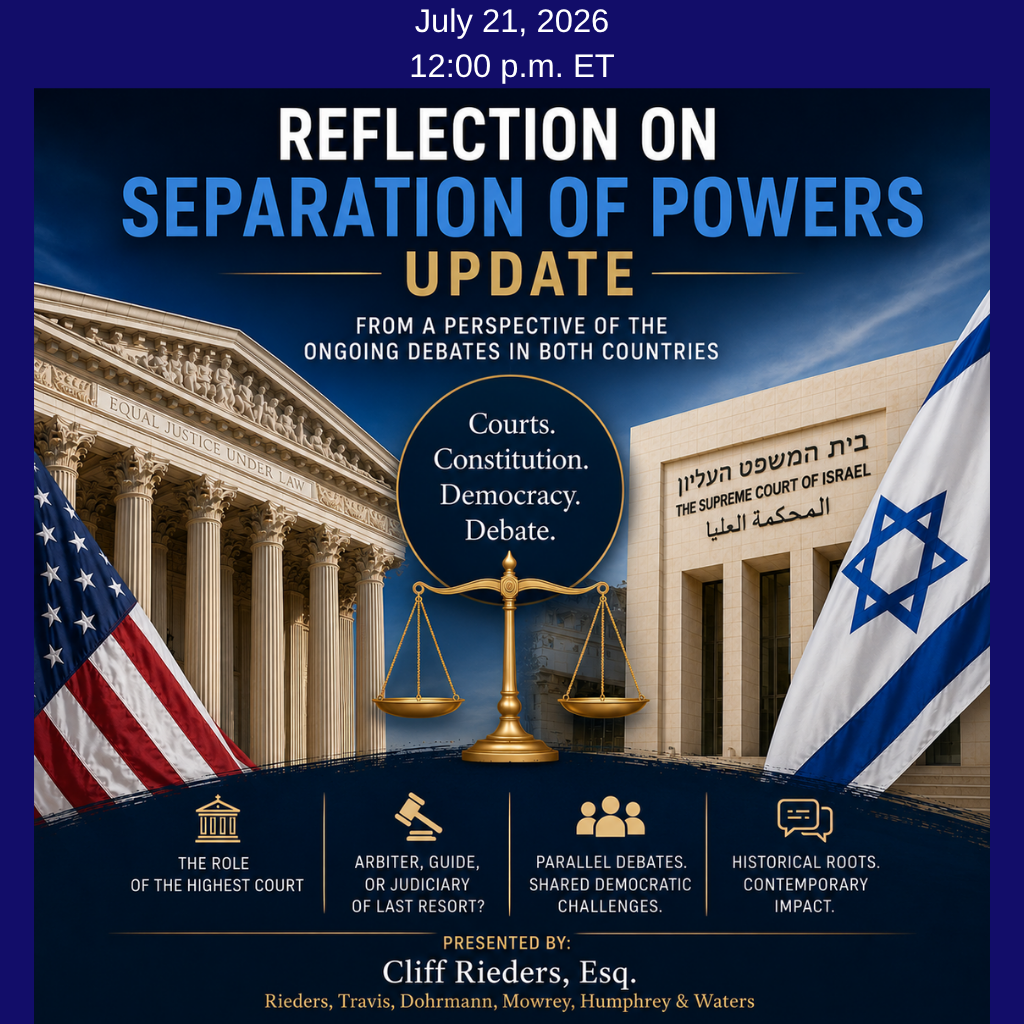
Separation of Powers in United States and Israel from a Perspective of the Ongoing Debates in Both C...
This is a comprehensive continuing legal education program designed exclusively for personal injury ...
This follow?on CLE builds on National Security & Data Privacy: Complying with the Bulk Data...