
Exciting new series on “Voice, Body and Movement for Lawyers – How to connect with the jury and find Justice Through Dramatic Technique!”
Click here to find out more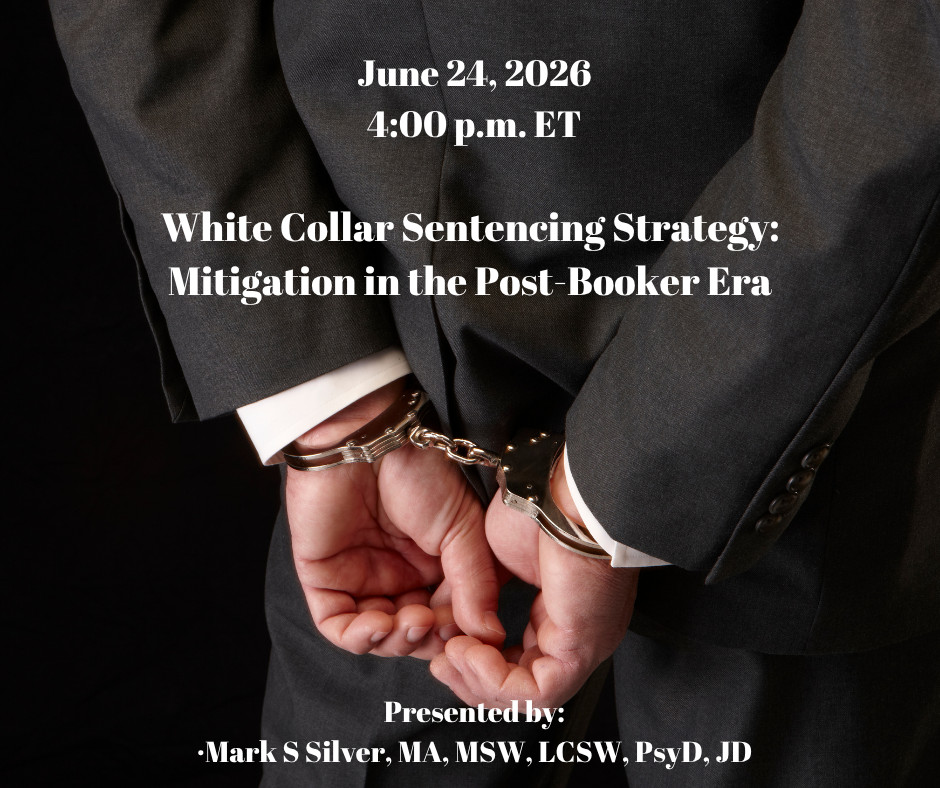
This program examines mitigation strategies for white-collar defendants in the post-Booker sentencing landscape. Participants will explore how psychological factors, personal history, and contextual elements influence sentencing outcomes.
The course addresses common challenges, including prosecutorial bias and misconceptions about white-collar defendants. It also provides strategies for developing effective mitigation narratives.
Attorneys will gain tools to advocate for fair and individualized sentencing outcomes.
Learning Objectives:
What are the left and rights limits, penalties, and best practices for export controls under Interna...

Trademark doctrine was built for a marketplace that no longer exists, leaving practitioners to litig...
This is a comprehensive continuing legal education program designed exclusively for personal injury ...

Join us for Part 2 of a program tailored for attorneys seeking a better understanding of the ongoing...

Decentralized Autonomous Organizations (DAOs) and other digital-native structures have moved from ni...
This course analyzes federal contractor cyber security obligations under the Federal Acquisition Reg...
This program introduces psychosocial evaluations as a valuable tool in civil litigation, particularl...
This course examines the latest legal and compliance developments in the artificial intelligence (AI...

Whistleblowing, Tax Fraud, and Government Gatekeeping is a one-hour continuing legal education cours...
There are countless trial skill CLEs that will teach you the basics of trial strategies. This CLE is...