
Exciting new series on “Voice, Body and Movement for Lawyers – How to connect with the jury and find Justice Through Dramatic Technique!”
Click here to find out more
Artificial intelligence is being used more and more in everyday life. Unfortunately, where we have good actors, we also have bad actors. Fraudsters can be used in a multiple of ways. Whether it’s to clone voices, alter images and create fake videos to spread false or misleading information. These are some of the risk we need to deal with in today’s world. With AI, we need to understand the risks and opportunities it presents. The risk can be high, but prevention is the key. With every technology, there can be element of good and evil. Within financial services. AI can be applied to identify unusual activity, show inconsistent data, remove manual efforts, improve collaboration, and offer a quick and efficient means to review vast amounts of information.
During this webinar, we will discuss the risk and opportunities of today’s world, how fraudsters are using AI and how legitimate companies use it to their advantage
Overview of AI
• The risks that are out there
• The opportunities AI presents
• How we protect ourselves as an organization
• Future
• Q & A
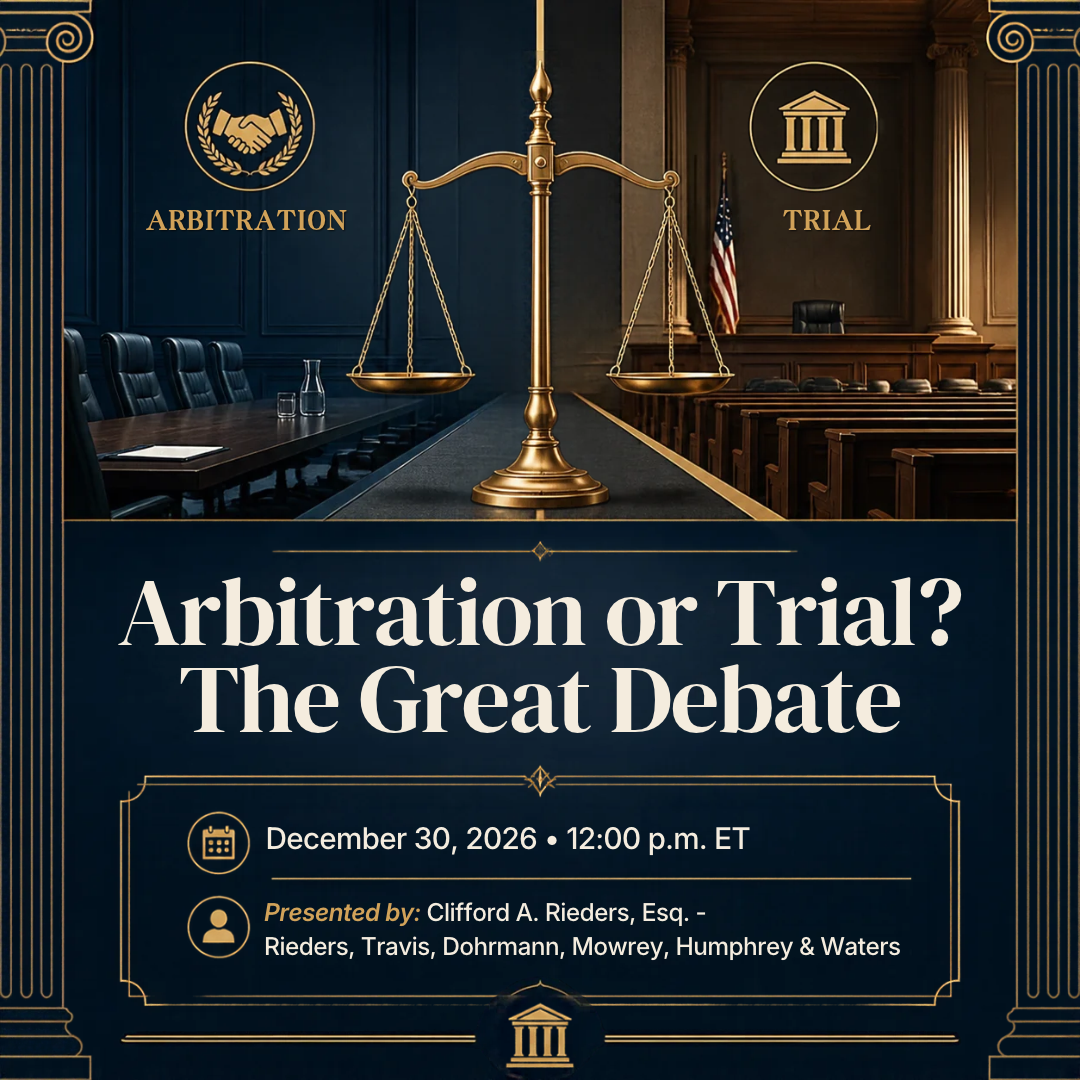
This seminar concerns a scope, jurisdiction, and exceptions to the Federal Arbitration Act. The Act ...
Class action waivers in arbitration agreements remain enforceable, but a decade of U.S. Supreme Cour...

New York City’s new Non-Primary Residence Property Surcharge—commonly known as the pied-...

This course on trade secrets litigation provides real-world best practices through all key stages of...
This program provides a practical roadmap to mastering every stage of the discovery process in civil...
Adverse and derogatory information often has devastating effects on a contractor's ability to win co...
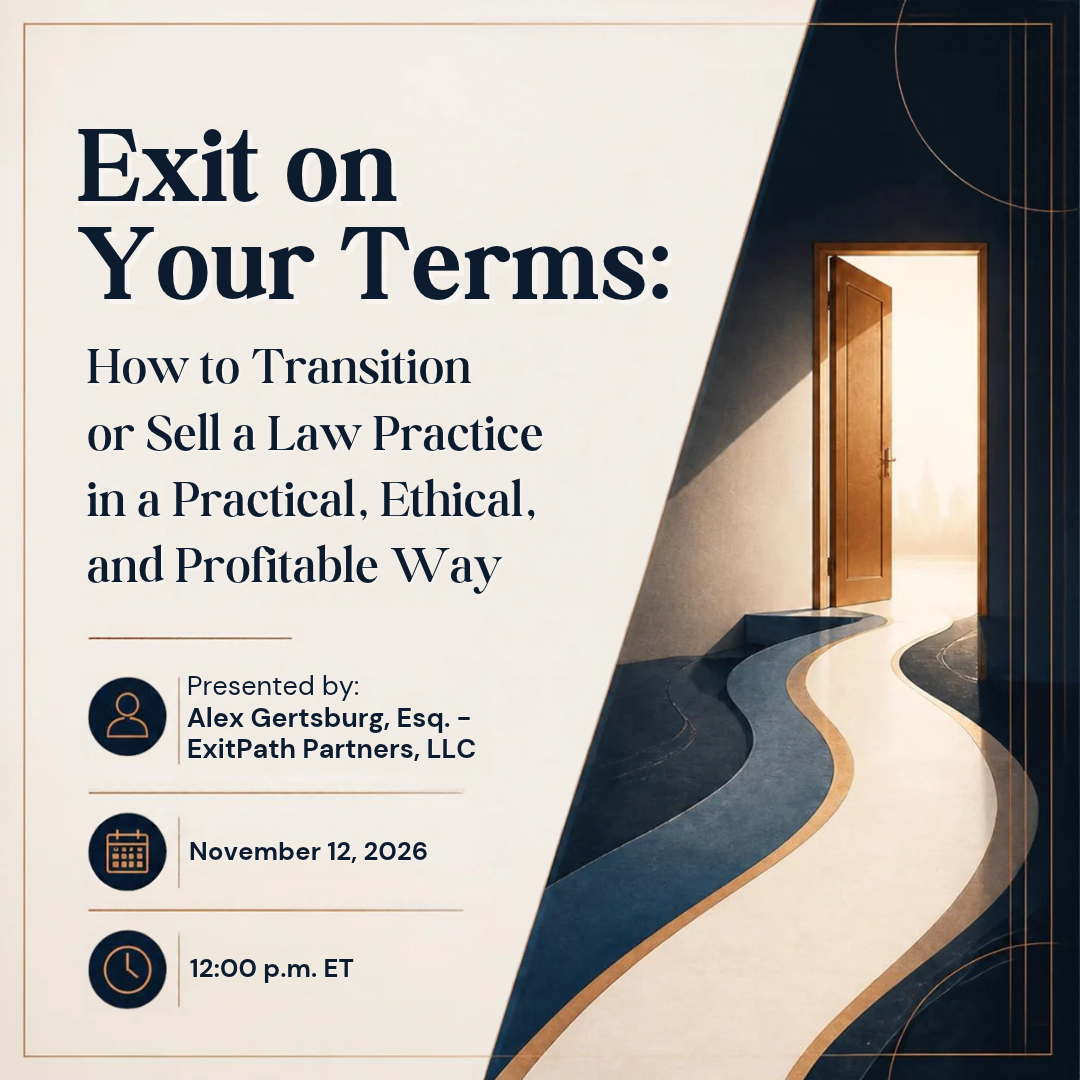
Turn decades of client relationships into lasting equity. This practical CLE shows attorneys how to ...

The practice of law places legal professionals under extraordinary and often chronic stress, making ...
Data privacy remains one of the most rapid areas of growth in the class action space. Plaintiffs con...
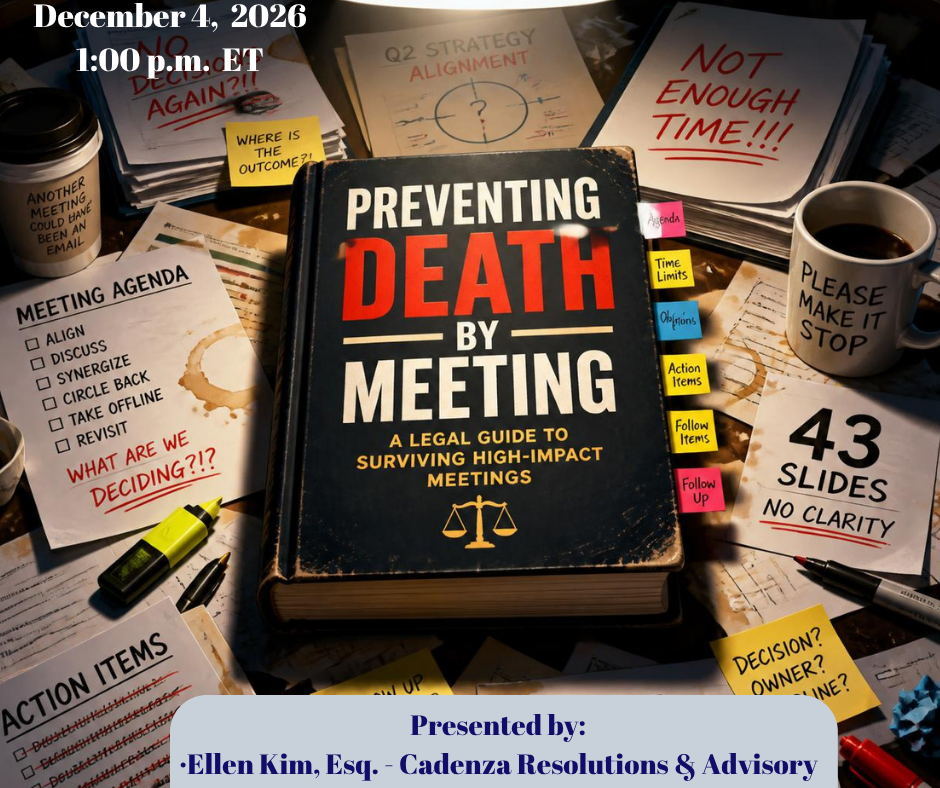
Lawyers lose hundreds of billable and operational hours every year to poorly managed meetings. Unfoc...