
Exciting new series on “Voice, Body and Movement for Lawyers – How to connect with the jury and find Justice Through Dramatic Technique!”
Click here to find out more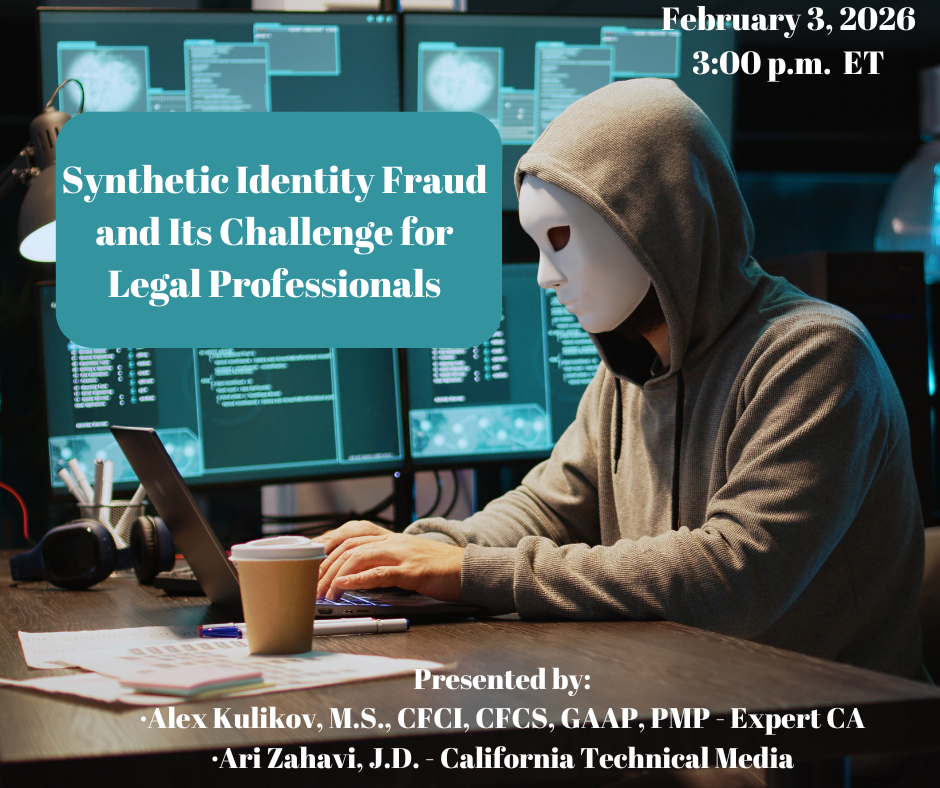
Synthetic identity fraud creates a significant legal and compliance challenge for professionals by complicating identity verification, increasing liability, and necessitating new strategies to combat fraud and maintain regulatory compliance. Legal teams must adapt to this evolving threat by strengthening fraud policies, ensuring compliance with privacy laws, and developing internal processes to detect and manage synthetic IDs to prevent both financial and legal repercussions. In this program, we will look at the nature of synthetic identity fraud and address the key challenges and roles for legal professionals.
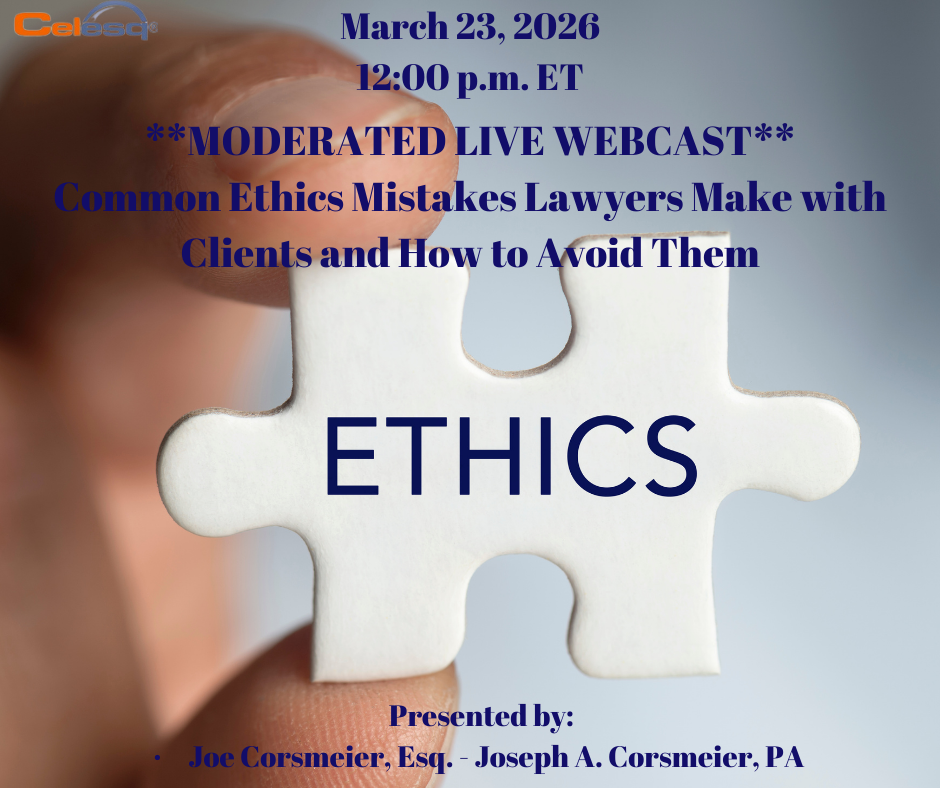
Many lawyers may not fully understand the Bar rules and ethical considerations regarding client repr...
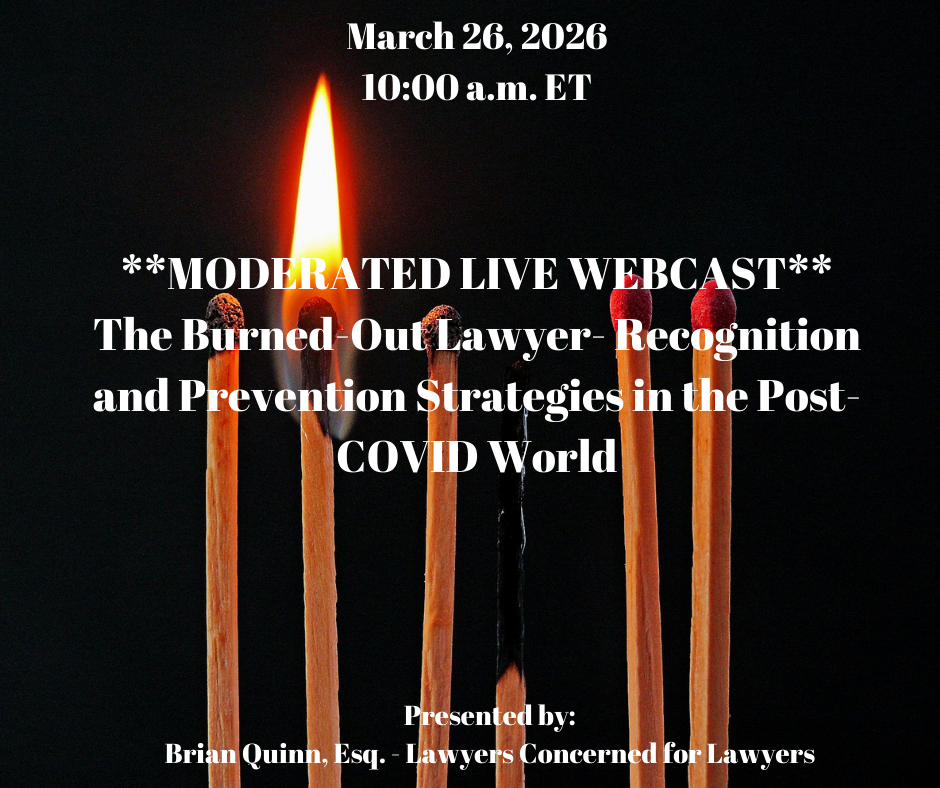
If there is one word we heard during our journey through the pandemic and continue to hear more than...
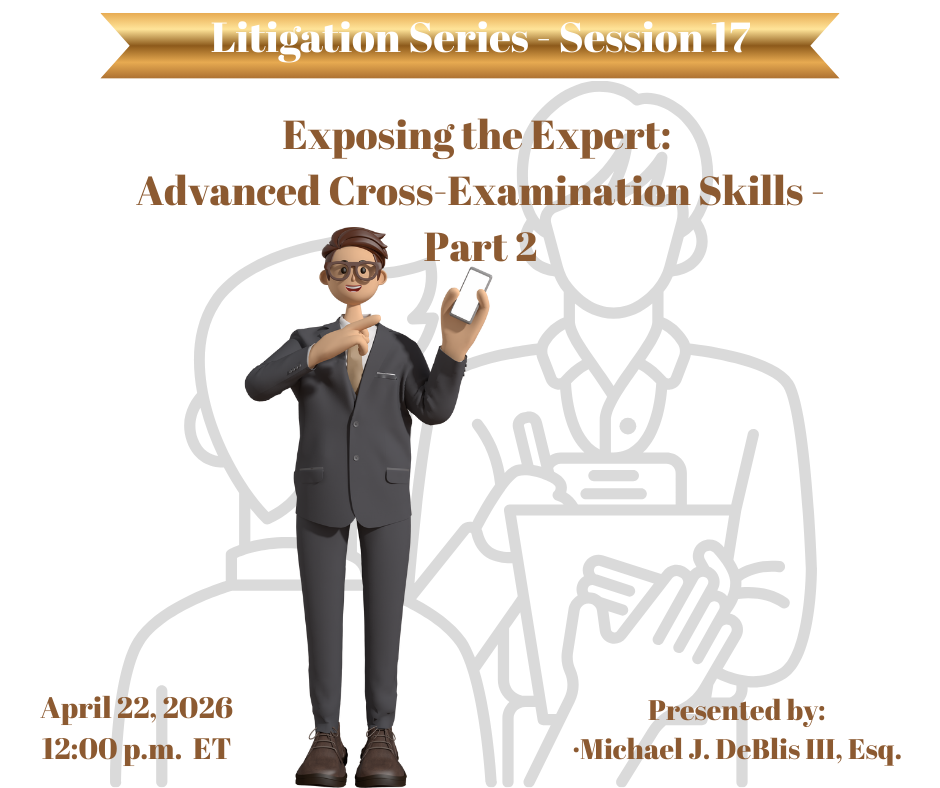
Part 2 - This program will continue the discussion from Part 1 focusing specifically on cross?examin...
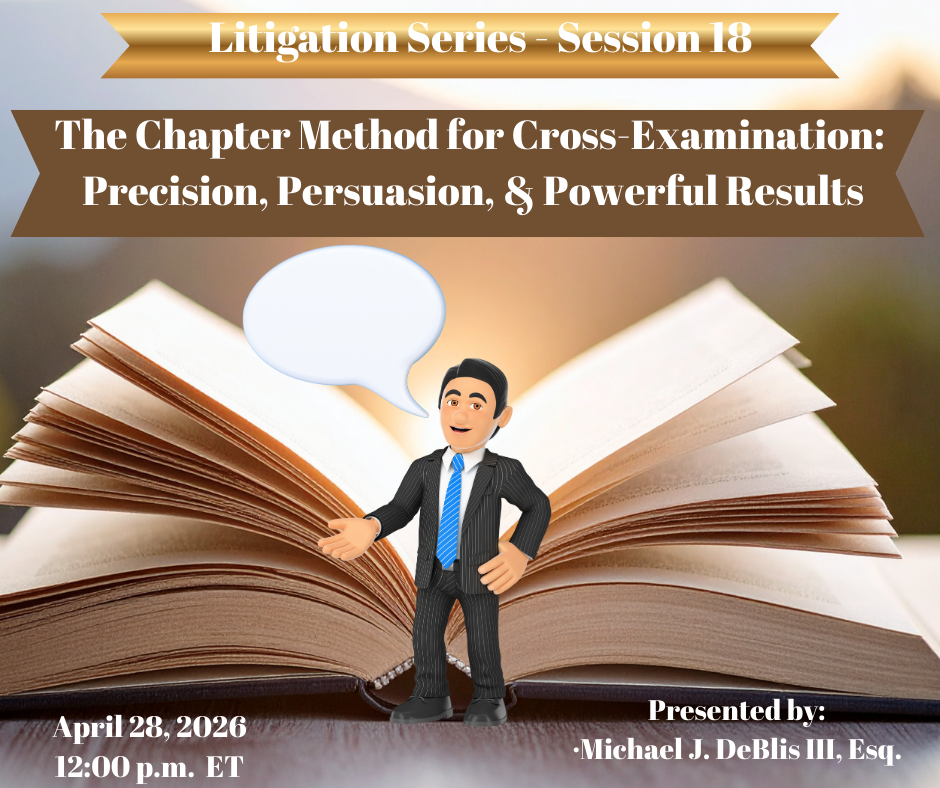
The “Chaptering Your Cross” program explains how dividing a cross?examination into clear...

This companion program to Part 1 goes deeper into the rhetorical power of Shakespeare, emphasizing h...
This course breaks down GAAP’s ten foundational principles and explores their compliance impli...

Loneliness isn’t just a personal issue; it’s a silent epidemic in the legal profession t...

This CLE program examines attorneys’ ethical duties in managing electronically stored informat...
Disasters, whether natural or manmade, happen. Disasters can impact the practice of law and, among o...
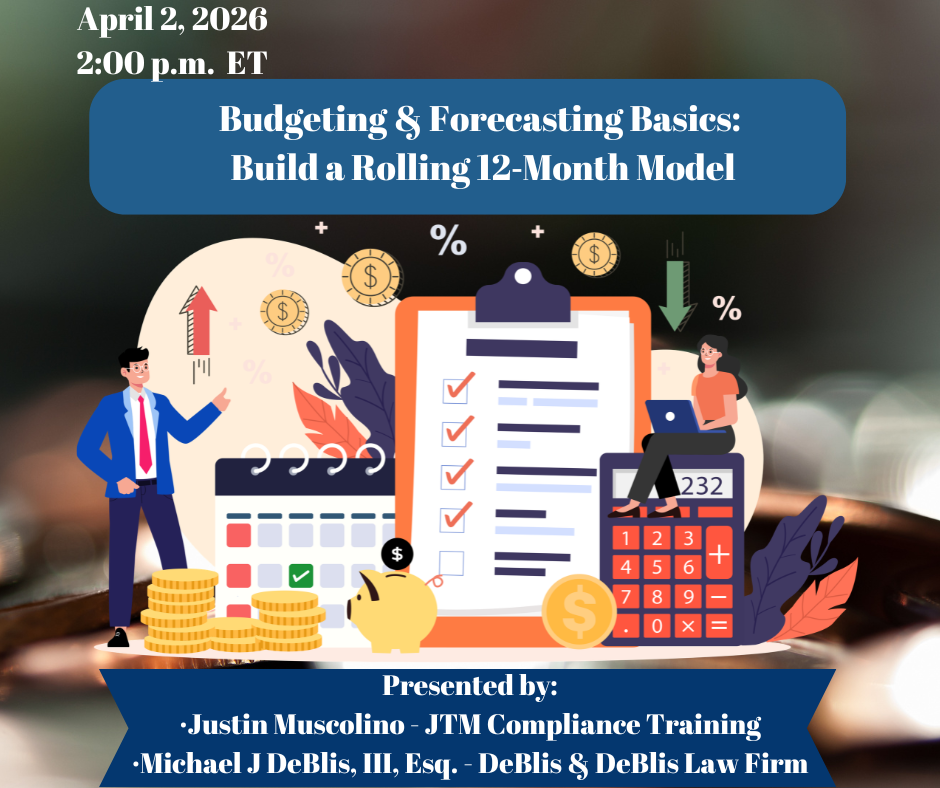
This CLE session introduces attorneys to budgeting and forecasting concepts used in corporate planni...