
Exciting new series on “Voice, Body and Movement for Lawyers – How to connect with the jury and find Justice Through Dramatic Technique!”
Click here to find out more
This CLE will cover the critical ethics issues involved in leaving government practice for the private sector. It will describe the applicable ethics rules, statutes, and regulations that govern applying for private sector jobs while serving in the government, as well as how to ethically transition from the public to private sector. The CLE will cover the key Rules of Professional Conduct implicated in “revolving door” transitions including Rule 1.7 (current client conflicts), Rule 1.9 (former client conflicts), Rule 1.6 (confidentiality), and Rule 1.11 (successive government and private employment). It will also describe the relevant portions of 18 U.S.C. 207 (Post-Employment Restrictions), 18 U.S.C. 208 (Personal Financial Interests), and 5 CFR Part 2635, Subpart F (Negotiating for Employment).
This program provides a practical roadmap to mastering every stage of the discovery process in civil...
This program provides trial attorneys with a thorough grounding in the three principal currency repo...
Lawyers lose hundreds of billable and operational hours every year to poorly managed meetings. Unfoc...
Adverse and derogatory information often has devastating effects on a contractor's ability to win co...
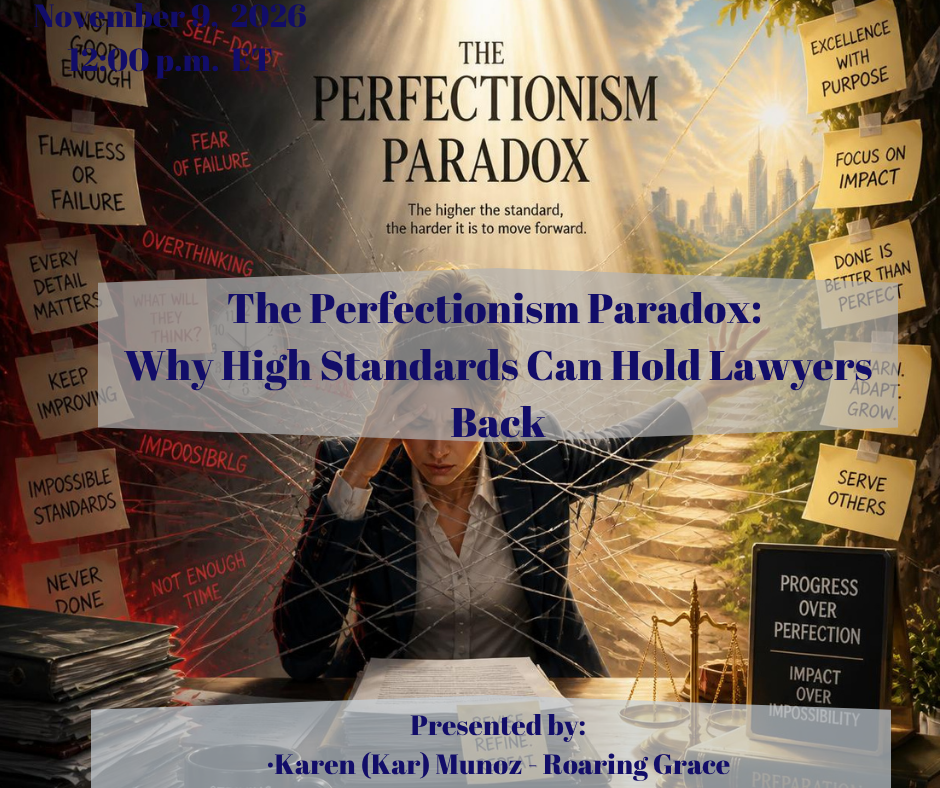
Perfectionism is often rewarded in the legal profession. It drives attention to detail, thorough pre...
This course on trade secrets litigation provides real-world best practices through all key stages of...
During this course you will take a deep dive into federal bid protest litigation at the U.S. Court o...

This course is meant for lawyers of all levels and areas of practice, and in it, we will explore way...
The practice of law places legal professionals under extraordinary and often chronic stress, making ...

I was wrongfully separated from the military and I will get no military pay and disability retiremen...