
Exciting new series on “Voice, Body and Movement for Lawyers – How to connect with the jury and find Justice Through Dramatic Technique!”
Click here to find out more
Nowhere is the gap between technology and regulation more pronounced than in AI. For lawyers, this often means navigating ethical risks without clear guidance. But staying current with AI tools isn't just useful—it’s a professional obligation. Understanding how AI intersects with legal ethics is essential, but recognizing risks like bias, opacity, or overreliance is not the same as knowing how to navigate them in practice.
This program, jointly presented by a lawyer and a software engineer, moves beyond theory to focus on practical solutions. It demystifies the processes behind AI and connects those mechanics directly to lawyers’ ethical duties, offering concrete strategies for responsible use.
By the end of the session, participants will be able to:
1. Understand the origin of potential ethical hazards in an AI tool
2. Identify potential ethical hazards in the use of AI in a law practice (applying Model Rules 1.1, 1.4[b], 1.5[a], 1.6[c], 5.1, 5.2, 5.4)
3. Evaluate risk mitigation strategies
“Maybe I drink more than I should, but it isn’t affecting my life-I’m ‘High-...
Large World Models (LWMs)— the next generation of AI systems capable of generating...
This program examines the strategy and artistry of closing argument, positioning it as a lawyer&rsqu...
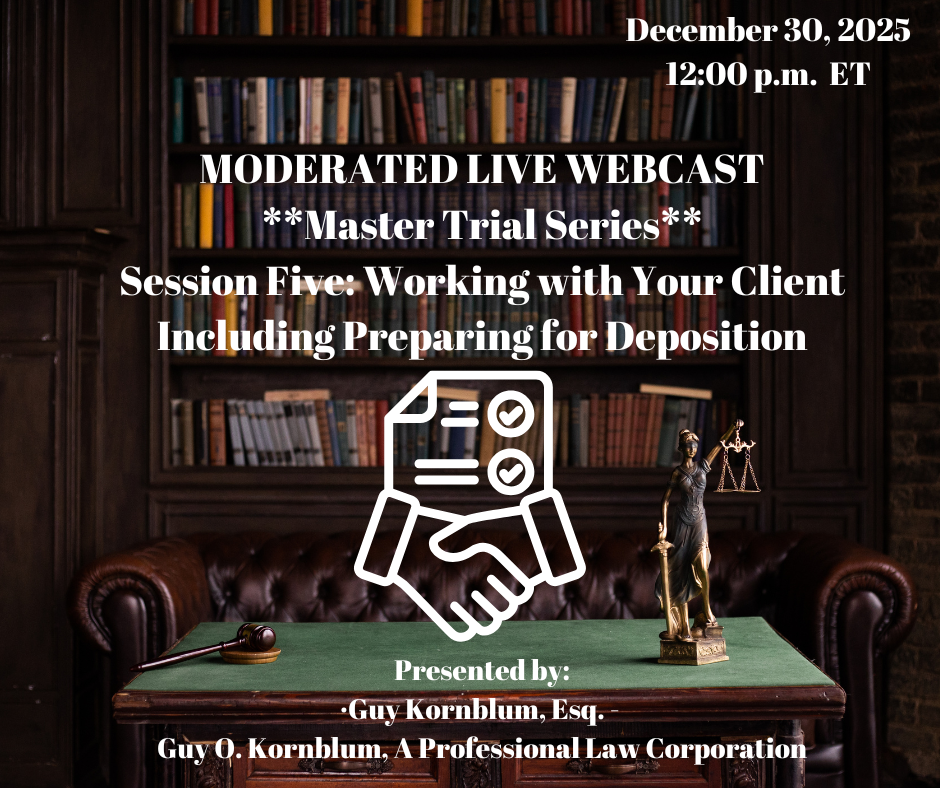
MODERATED-Session 5 of 10 - Mr. Kornblum, a highly experienced trial and litigation lawyer for over ...
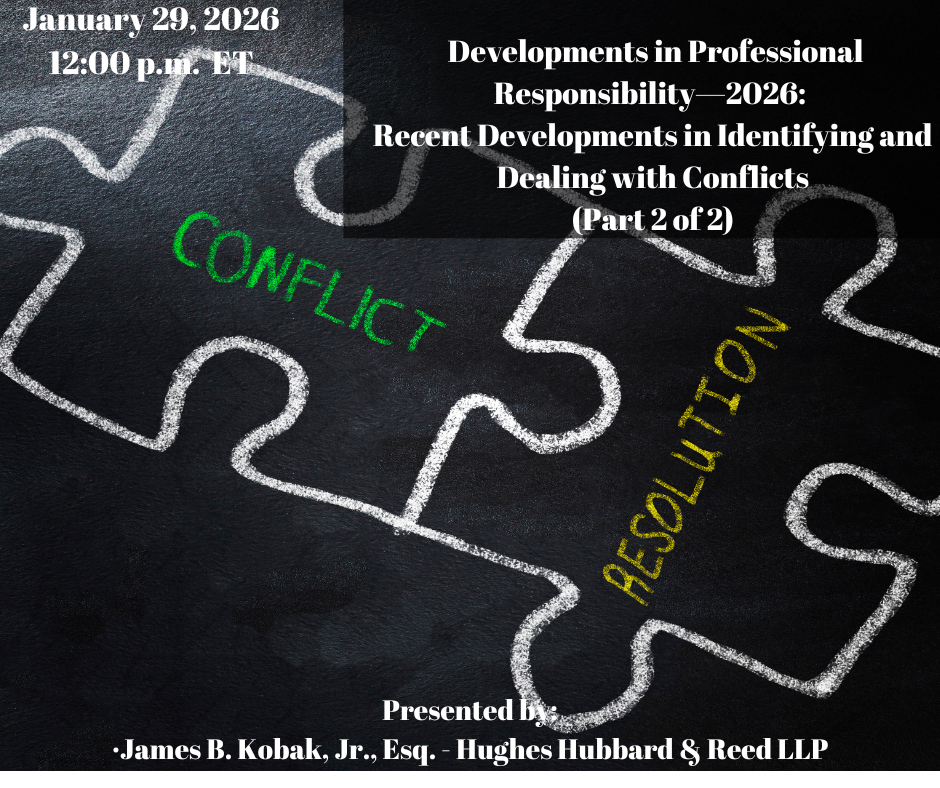
Part 2 of 2 - Lawyers at all levels of experience and even sophisticated law firms and general couns...
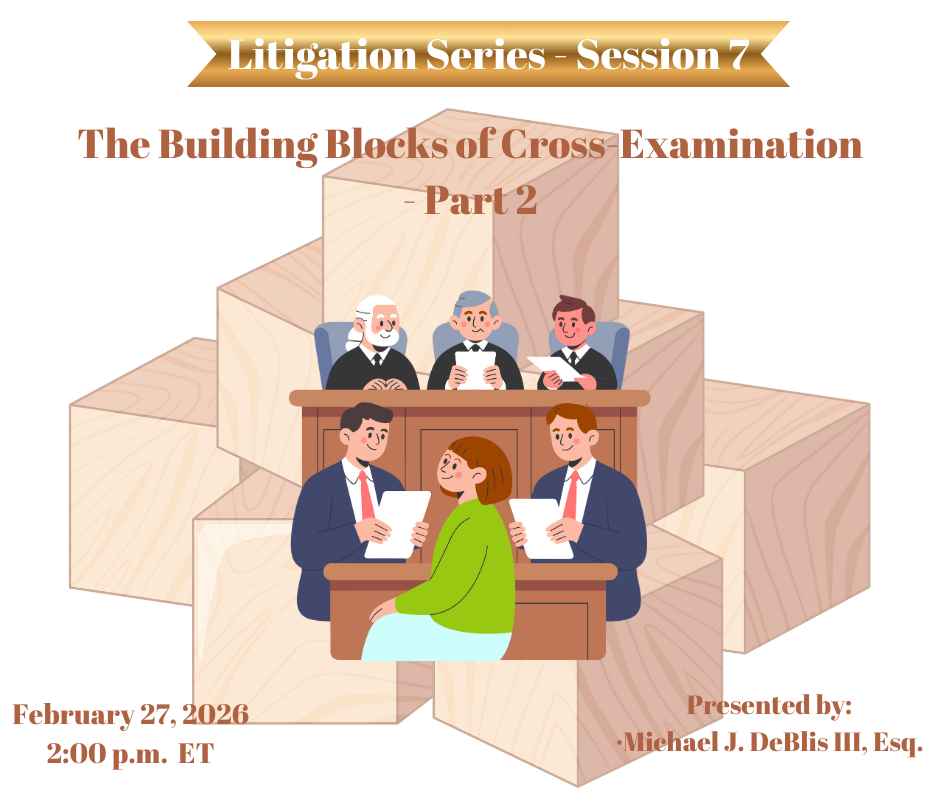
Part 2 dives deeper into advanced cross?examination techniques, teaching attorneys how to maintain c...
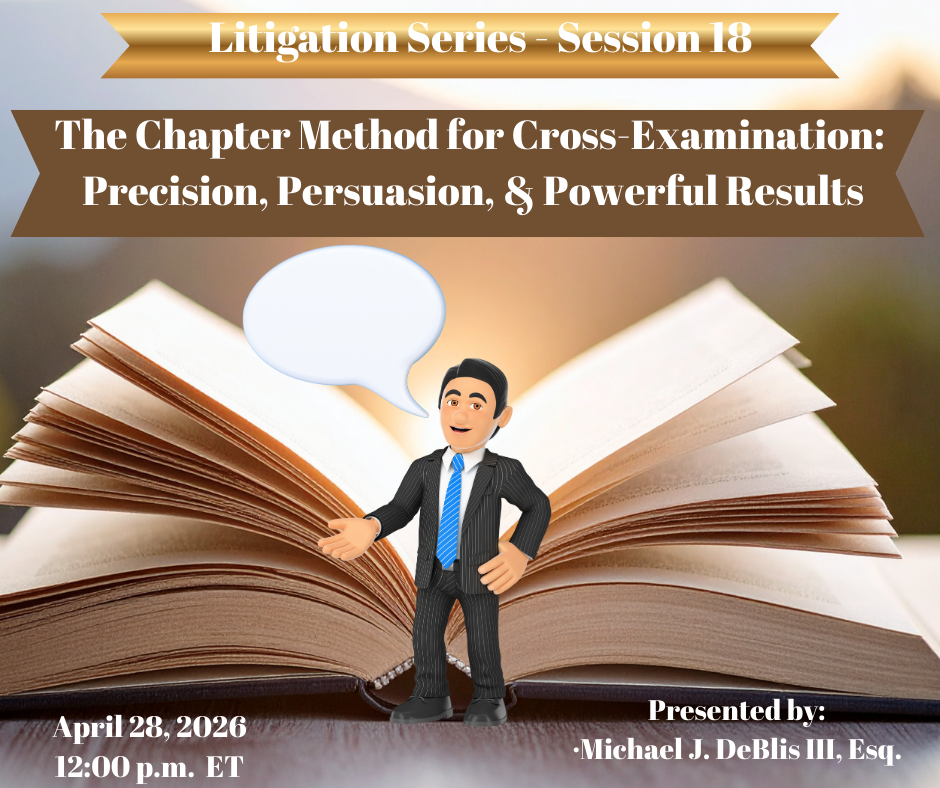
The “Chaptering Your Cross” program explains how dividing a cross?examination into clear...
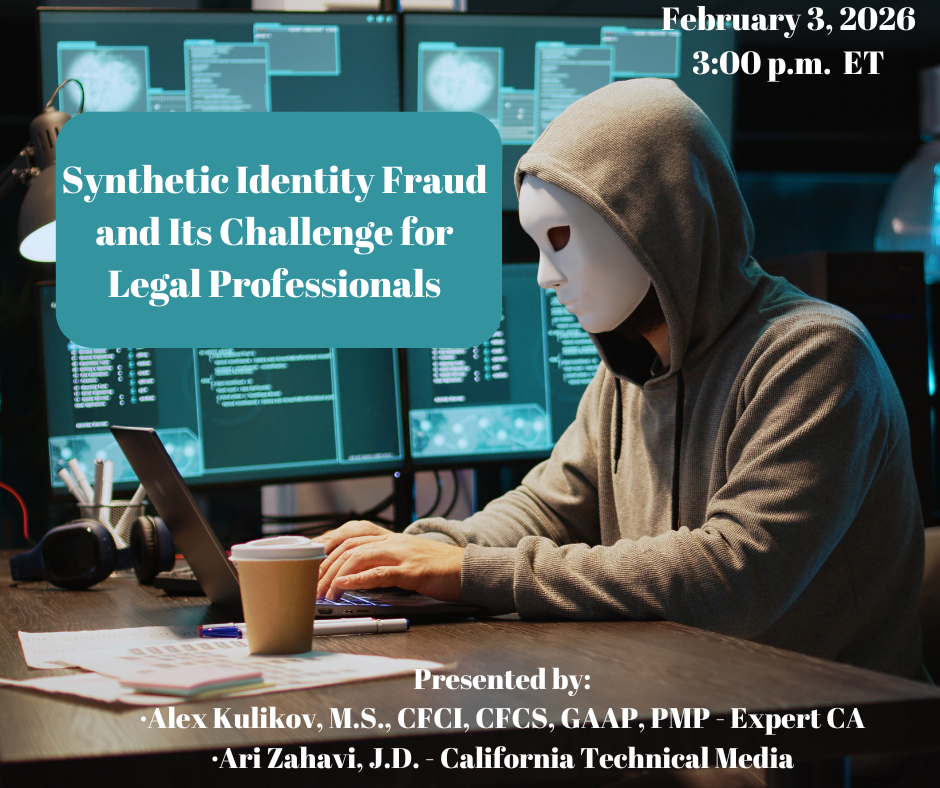
Synthetic identity fraud creates a significant legal and compliance challenge for professionals by c...
Attorneys navigating today’s litigation landscape face growing challenges in identifying, pres...
MODERATED-Part 2 of 2 - In this presentation, I will discuss strategies for cross-examining expert w...