
Exciting new series on “Voice, Body and Movement for Lawyers – How to connect with the jury and find Justice Through Dramatic Technique!”
Click here to find out more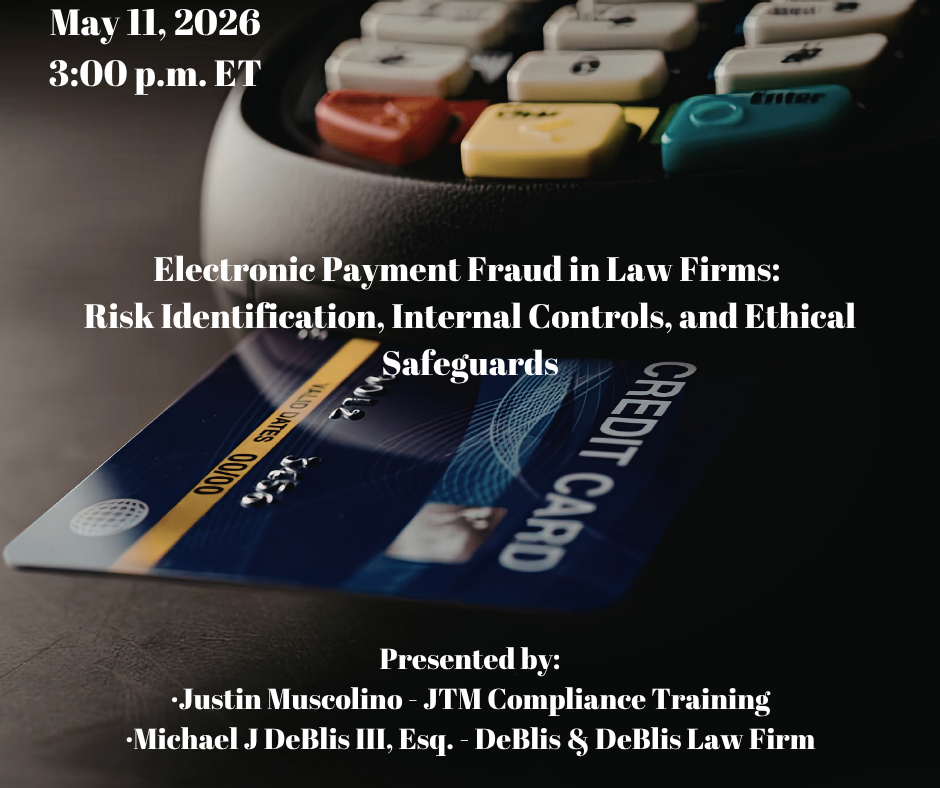
As law firms increasingly transition from paper-based disbursements to electronic payment systems—including ACH transfers, wire payments, and virtual cards—they face heightened exposure to sophisticated fraud schemes that threaten both client funds and firm operations. Cybercriminals are actively targeting legal organizations through business email compromise (BEC), phishing, vendor impersonation, and payment redirection tactics, exploiting gaps in internal controls and staff awareness.
This program provides attorneys and law firm professionals with a practical framework for identifying, mitigating, and responding to electronic payment fraud risks within a legal practice environment. Drawing on real-world scenarios and current fraud trends, the session examines how these schemes infiltrate law firm workflows and where vulnerabilities commonly arise—from vendor onboarding through final funds disbursement.
Participants will analyze the intersection of fraud prevention with professional responsibility obligations, including safeguarding client property, maintaining confidentiality, and exercising reasonable supervision over staff and third-party vendors. The program also addresses how breakdowns in internal controls can expose firms to financial loss, reputational harm, and potential ethical violations.
Through a detailed review of payment processes, attendees will learn how to implement and strengthen internal safeguards such as dual authorization protocols, independent verification procedures, and callback controls. The session further explores how law firms can leverage technology solutions to detect anomalies, prevent unauthorized transactions, and enhance audit oversight.
In addition, the program emphasizes the importance of firm-wide training and awareness, equipping attorneys and staff with the ability to recognize red flags associated with fraudulent activity and respond appropriately. Attendees will also be guided through the development of a structured fraud response and escalation plan to ensure timely and effective action when threats are identified.
This course is designed for attorneys, law firm administrators, and finance professionals seeking to enhance their firm’s risk management infrastructure and protect client and firm assets in an evolving threat landscape.
Key Topics Include:

Most legal professionals are operating in survival mode whether they realize it or not. Not crisis-l...
My contract was terminated and the contracting officer did not pay my invoices – what can I do...

Lawyers often work with clients, colleagues, and opposing counsel who are navigating some of the har...

During this course, we will go over your rights under the Freedom of Information Act (FOIA) and Priv...

What are the left and rights limits, penalties, and best practices for export controls under Interna...
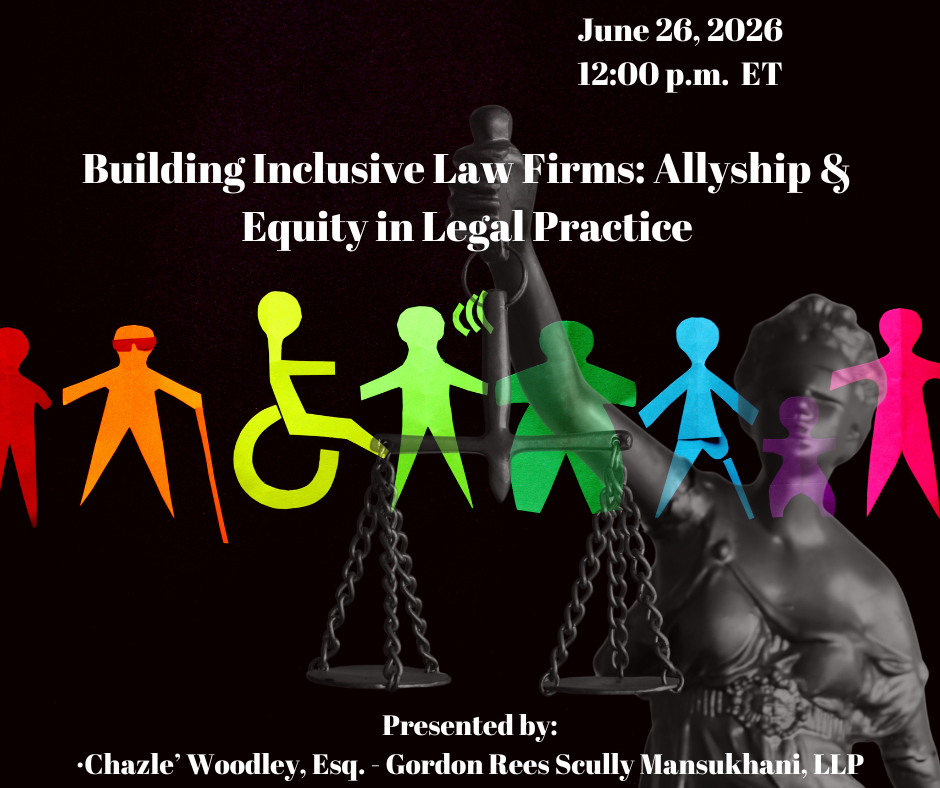
This interactive course is designed to equip legal professionals with the knowledge, tools, and stra...

Use of artificial intelligence and other automated tools for performance and predictive analytics in...

Contracting with the Federal Government is not like a business deal between two companies or a contr...

Discussion of religion and reasonable accommodation in the workplace. Thanks to the United States Su...
Effective representation depends on trust, communication, and responsiveness, yet these can break do...