
Exciting new series on “Voice, Body and Movement for Lawyers – How to connect with the jury and find Justice Through Dramatic Technique!”
Click here to find out more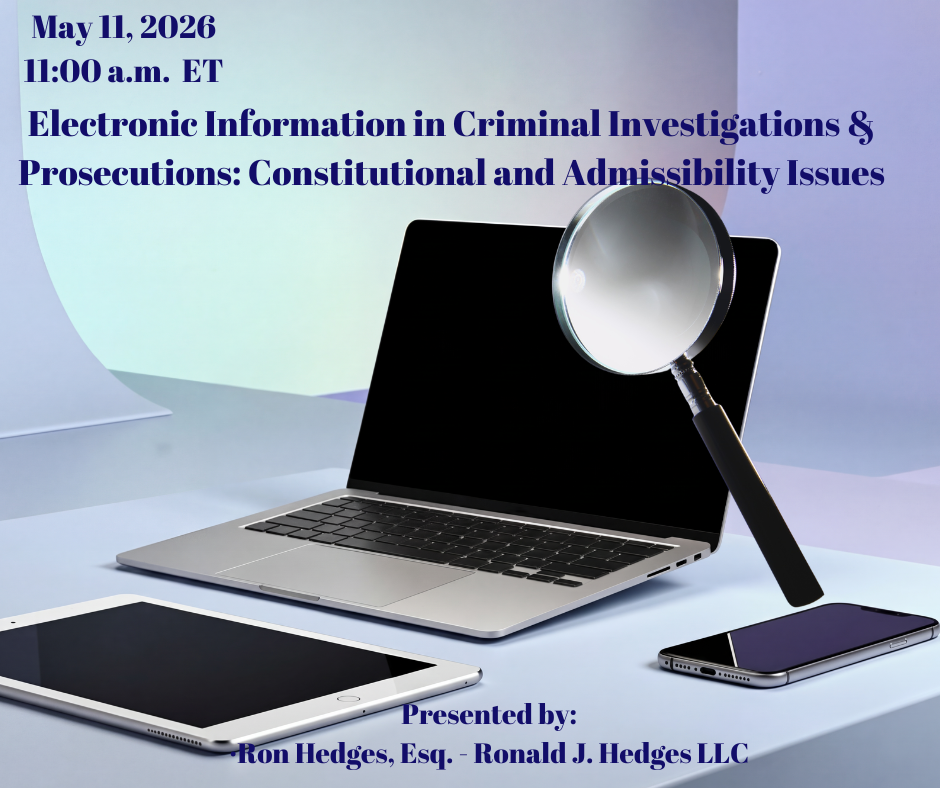
Electronic information is a common feature of criminal investigations and prosecutions, both federal and State. Such information may be relevant to establishing criminal activity and may itself be evidence of a crime. Moreover, electronic information may lead to challenges to admissibility.
This program will address the Fourth, Fifth, and Sixth implications of investigations and prosecutions as will also consider how the Federal Rules of Evidence and proposed amendments to those rules deal with electronic information, including products of generative artificial intelligence.

Recent studies have shown that there has been a dramatic increase in impairment due to alcoholism, a...

Recent studies have shown that there has been a dramatic increase in impairment due to alcoholism, a...
This program examines the strategic use of expert testimony in immigration court proceedings. Partic...

During this course, you will learn about best practices and strategies for retaining intellectual pr...

Workplace investigations are now more complex, high-stakes, and scrutinized than ever before. Employ...

This course will provide a detailed overview of the Medicare Secondary Payer act as well as provide ...

As the largest purchaser of goods and services in the world, the United States Government requires f...

Philip A. Greenberg, Esq., who has been a litigator in the State and Federal Courts for 52 years, ha...
This course analyzes federal contractor cyber security obligations under the Federal Acquisition Reg...
This program, conducted by a seasoned litigation and trial lawyer, will emphasize what litigators ca...