
Exciting new series on “Voice, Body and Movement for Lawyers – How to connect with the jury and find Justice Through Dramatic Technique!”
Click here to find out more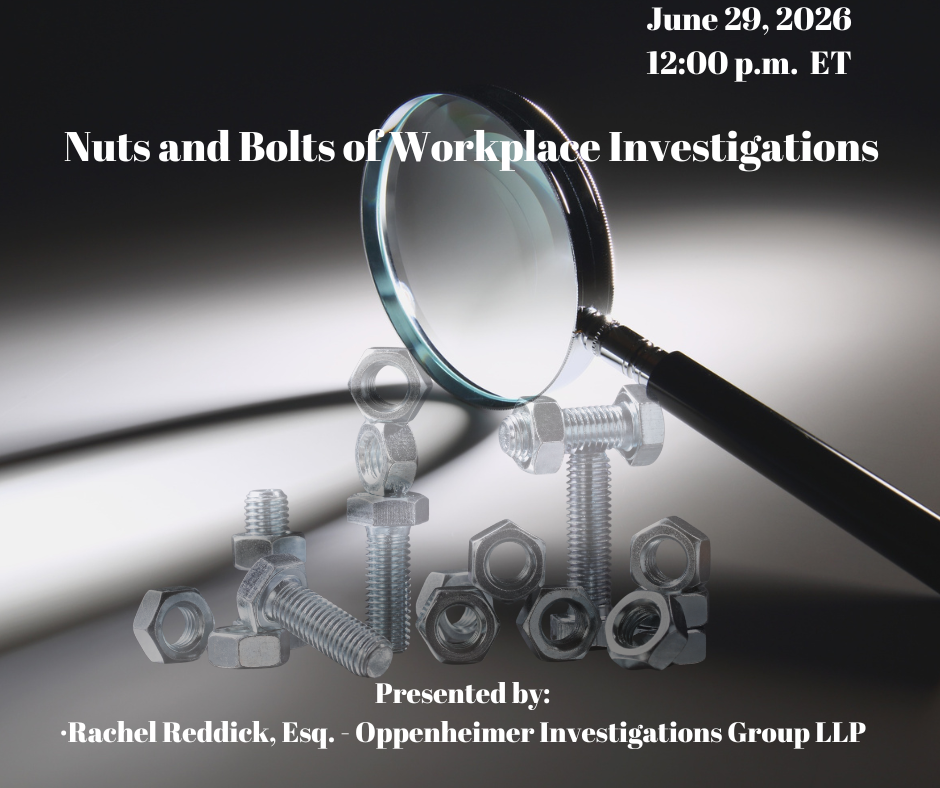
Workplace investigations are now more complex, high-stakes, and scrutinized than ever before. Employers are expected not only to respond promptly to complaints involving harassment, discrimination, retaliation, and other workplace misconduct, but also to conduct investigations that are fair, thorough, and defensible. Attorneys are often called upon to lead these investigations or advise organizations through the process.
This program provides a practical, step-by-step overview of workplace investigations from intake to final findings. Topics include identifying when an investigation is necessary, defining the scope of the investigation, conducting effective witness interviews, avoiding bias, assessing credibility, weighing conflicting evidence, documenting findings, and navigating post-investigation considerations. The presentation will also address evolving challenges facing investigators, including remote evidence, workplace culture concerns, increasingly sophisticated employee complaints, as well as influence of Generative AI in investigations.
This program explores the impact of complex trauma on criminal defendants through a developmental an...
This program will address the ethical obligations of Lawyer Advocates representing clients in arbitr...
Class action litigation continues to evolve rapidly in response to an innovative plaintiffs’ b...
Philip A. Greenberg, Esq., who has been a litigator in the State and Federal Courts for 52 years, ha...
This dynamic CLE presentation challenges trial lawyers to rethink everything they were taught about ...

During this course, you will learn about best practices and strategies for retaining intellectual pr...
Over the past year, the Patent Trial and Appeal Board (PTAB) has undergone a dramatic policy shift r...
Decentralized Autonomous Organizations (DAOs) and other digital-native structures have moved from ni...
This program examines the strategic use of expert testimony in immigration court proceedings. Partic...
As the largest purchaser of goods and services in the world, the United States Government requires f...