
Exciting new series on “Voice, Body and Movement for Lawyers – How to connect with the jury and find Justice Through Dramatic Technique!”
Click here to find out more
Creators are investing heavily in the aesthetic aspects of their innovations as metaverse technology—e.g., AR/VR, Artificial Intelligence, Video Games, etc.—reaches new heights. Design patents are powerful tools for protecting ornamental features, including user interfaces, animations, form factors, and 3D shapes. Trademarks also play a crucial role in protecting novel origin indicators in this new virtual space. Understanding the different strategies for these important intellectual property assets will be key to protecting the visual products of the metaverse from competitors, counterfeiters, and copy cats.

Data privacy remains one of the most rapid areas of growth in the class action space. Plaintiffs con...

Lawyers lose hundreds of billable and operational hours every year to poorly managed meetings. Unfoc...

This program provides trial attorneys with a thorough grounding in the three principal currency repo...

Confidentiality Agreements (also called NDAs) are too often treated as routine. So routine, th...

This course is meant for lawyers of all levels and areas of practice, and in it, we will explore way...

Class action litigation continues to expand in both number of filings and monetary exposure, with se...

Class action litigation presents significant legal and business challenges for employers and corpora...

As the largest purchaser of goods and services in the world, the United States Government requires f...
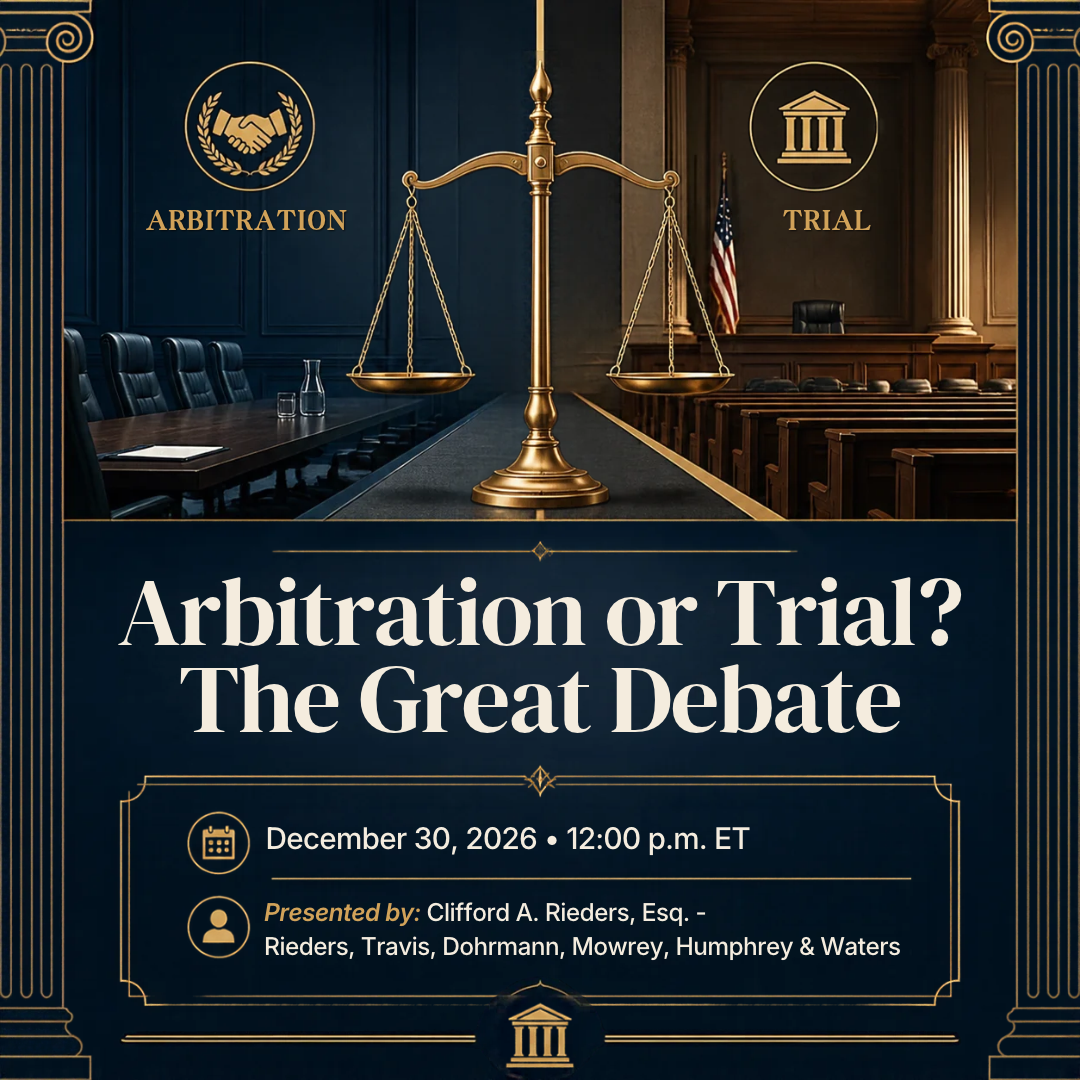
This seminar concerns a scope, jurisdiction, and exceptions to the Federal Arbitration Act. The Act ...

During this course, you will learn about best practices and strategies for retaining intellectual pr...