
Exciting new series on “Voice, Body and Movement for Lawyers – How to connect with the jury and find Justice Through Dramatic Technique!”
Click here to find out more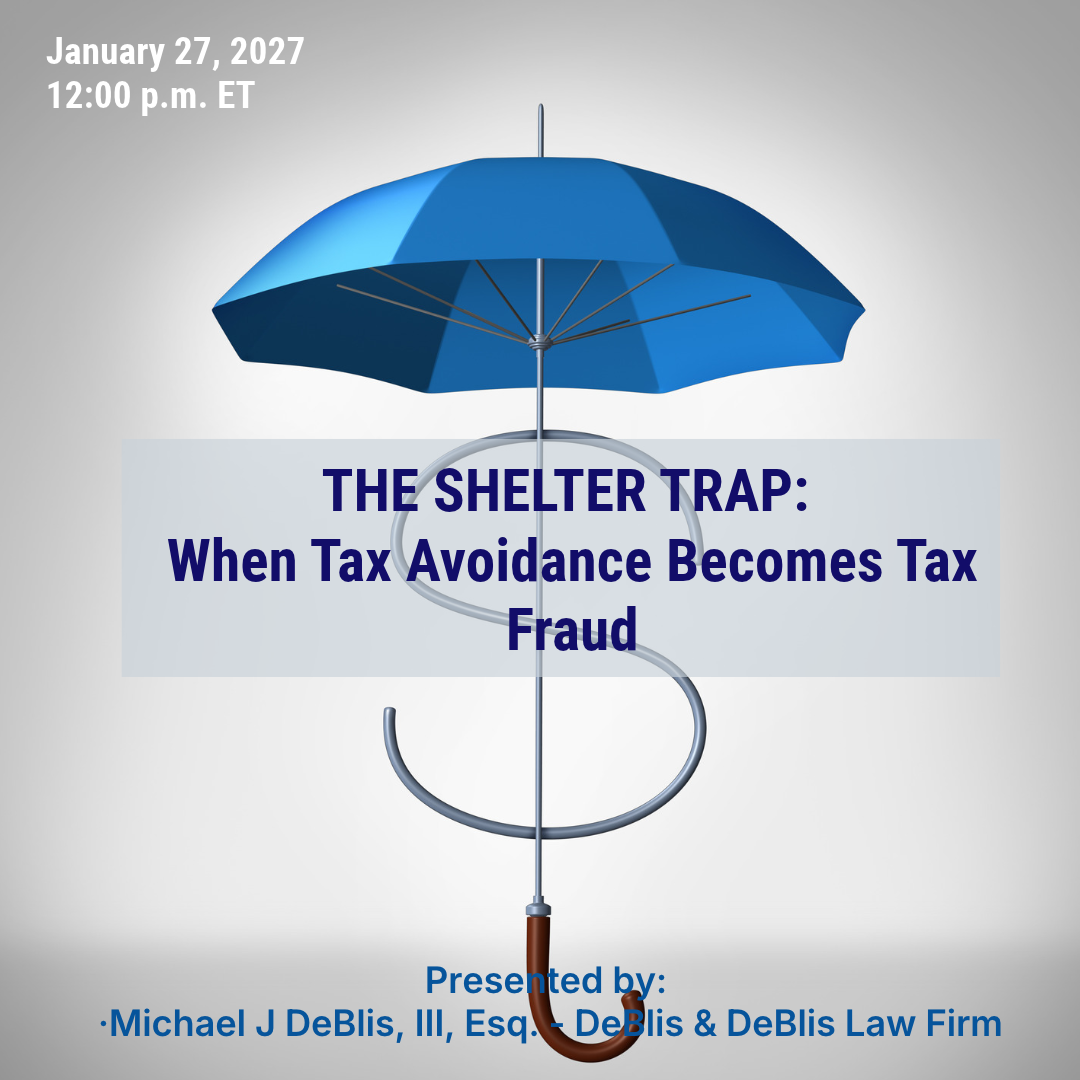
Every tax lawyer, business lawyer, estate planner, and white-collar practitioner eventually meets a client who wants to "shelter" a large gain. Many tax shelters are lawful and valuable. Others have sent lawyers, accountants, and bankers to federal prison. This program explains where that line falls, how it gets crossed, and what juries have decided when the government drew it in court.
You will learn how tax shelters work and why Congress built the incentives behind them. You will then follow, step by step, how abusive shelters are designed, priced, papered, and defended. The core of the program is a detailed review of the major jury trials of illegal tax shelters from 2008 to 2026, with the facts and the verdict in each case. The program closes with a hypothetical in which you spot the issues yourself, then compare your analysis against an answer key.
Learning Objectives:
What juries decided. Facts, verdicts, sentences, and appellate outcomes in seven prosecutions that reached verdict:
· KPMG/BLIPS (2008)
· Ernst & Young (2009)
· the Peggs/Larsen/Stone insurance shelter (2009)
· the Daugerdas case involving Jenkens & Gilchrist, BDO Seidman, and Deutsche Bank (verdicts in 2011 and 2013)
· the Fisher syndicated conservation easement case (2023)
· the Kohn "Gain Elimination Plan" case (2024)
· the Predmore abusive-trust case (2026)
· The charges. The federal statutes prosecutors rely on, including conspiracy to defraud the United States, tax evasion, false and fraudulent returns, aiding and assisting, obstruction, mail and wire fraud, false statements, and money laundering.
The program also covers the willfulness standard, defenses that succeeded and failed, and issues specific to lawyers.
· Issue-spotting in practice. A fact-pattern hypothetical that tests your recognition of disclosure duties, valuation problems, backdated documents, opinion-letter risk, fee and referral conflicts, audit-stage conduct, record preservation, limitations periods, and remedial options.
Why This Program Matters
· Tax shelter prosecutions are not confined to promoters in the shadows. The cases covered here involved lawyers at major firms, partners at the largest accounting firms, and bankers. In several of them, the lawyers faced the same charges as the principals. In one, convictions of two lawyers were reversed on appeal because the evidence did not show they knew of the criminal plan. In another, an appraiser was acquitted while the promoters were convicted. These outcomes show what separates risky advice from criminal conduct, and attendees will leave with a clearer sense of where that boundary sits.
“Is Your Voice Biometric Data? BIPA, AI and the New Era of Voiceprint Litigation” looks ...
Join us for this presentation to learn about the U.S. Court of Appeals for the Federal Circuit litig...

This program examines the legal standards and factors courts throughout the United States apply when...
Adverse and derogatory information often has devastating effects on a contractor's ability to win co...
Conducting an internal investigation that is incisive, effective and legally compliant is tough enou...
AI tools and workplace silence create the same problem for legal teams: the safeguards in place, inc...
Incorrect military records prevent active duty and reserve Soldiers, Airmen, Guardians, Marines, Sai...
As the largest purchaser of goods and services in the world, the United States Government requires f...

I was wrongfully separated from the military and I will get no military pay and disability retiremen...
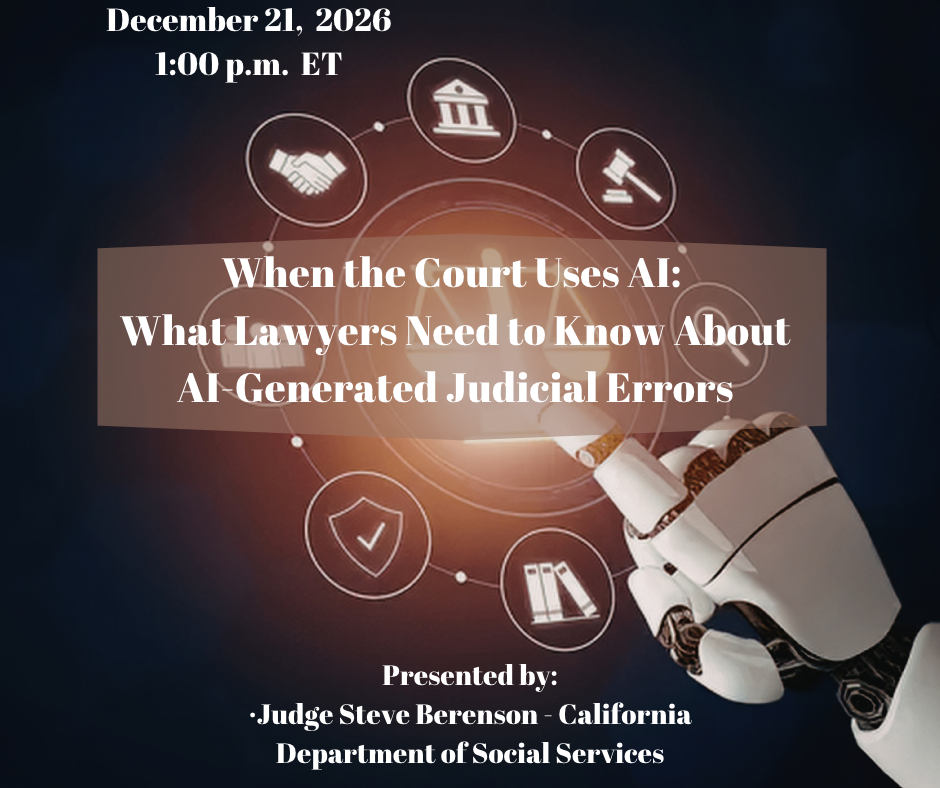
Most lawyers are aware of the high-profile cases in which attorneys were sanctioned or otherwise dis...