
Exciting new series on “Voice, Body and Movement for Lawyers – How to connect with the jury and find Justice Through Dramatic Technique!”
Click here to find out more
Part I introduces the foundational principles of cross?examination, explaining how lawyers must methodically prepare, identify vulnerabilities in testimony, and execute questioning with clarity and purpose. The program stresses that effective cross is not improvisation—it is a controlled performance anchored in careful anticipation of witness behavior.
By teaching attorneys to simplify objectives and avoid unnecessary risks, the presentation reframes cross?examination as a strategic storytelling device rather than a spontaneous battle.
Attorneys will receive a comparative analysis of GAAP and IFRS with emphasis on cross-border legal c...
Many lawyers may not fully understand the Bar rules and ethical considerations regarding client repr...
Large World Models (LWMs)— the next generation of AI systems capable of generating...
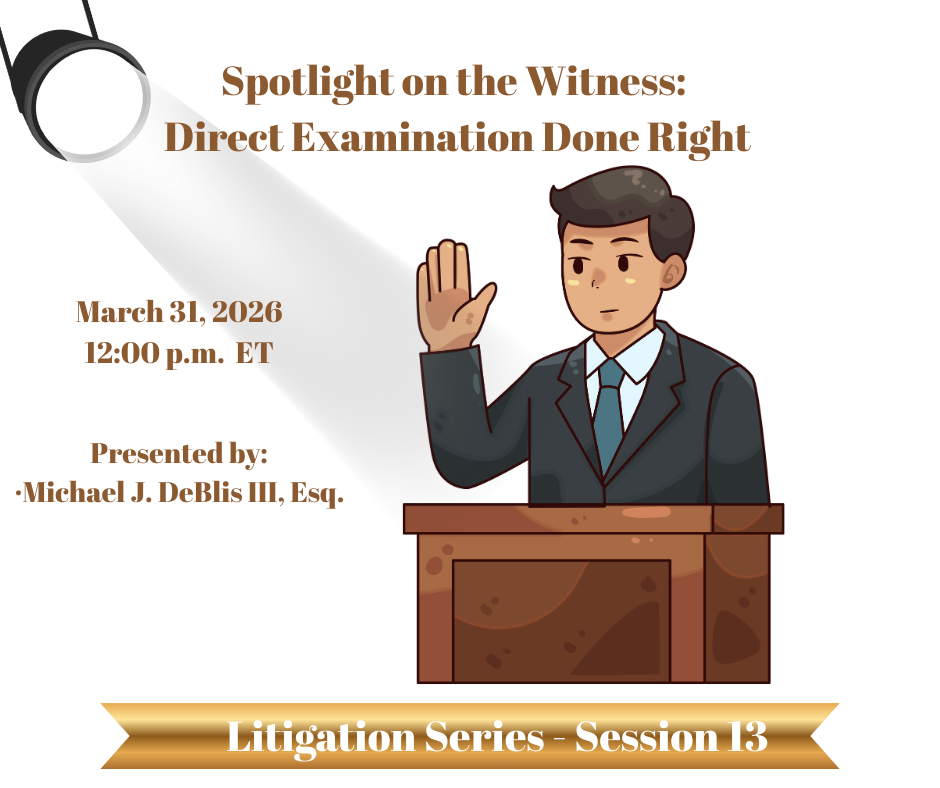
The direct examination presentation outlines how attorneys can elicit truthful, credible testimony w...

This program provides a comprehensive analysis of the Sixth Amendment Confrontation Clause as reshap...

Effective data privacy and artificial intelligence governance programs do not happen by accident. Th...
This session highlights the legal and compliance implications of divergences between GAAP and IFRS. ...
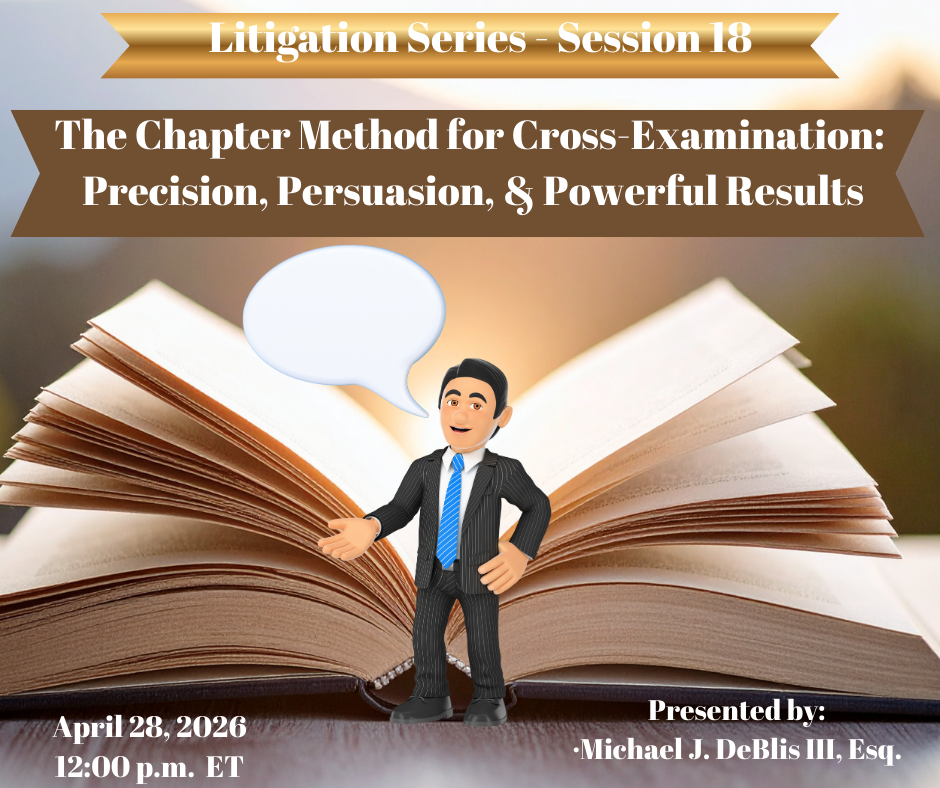
The “Chaptering Your Cross” program explains how dividing a cross?examination into clear...

This attorney-focused program reviews upcoming Nacha rule changes for 2026 with emphasis on legal ob...

This Shakespeare?inspired program illustrates how Shakespearean technique can enrich courtroom advoc...