
Exciting new series on “Voice, Body and Movement for Lawyers – How to connect with the jury and find Justice Through Dramatic Technique!”
Click here to find out more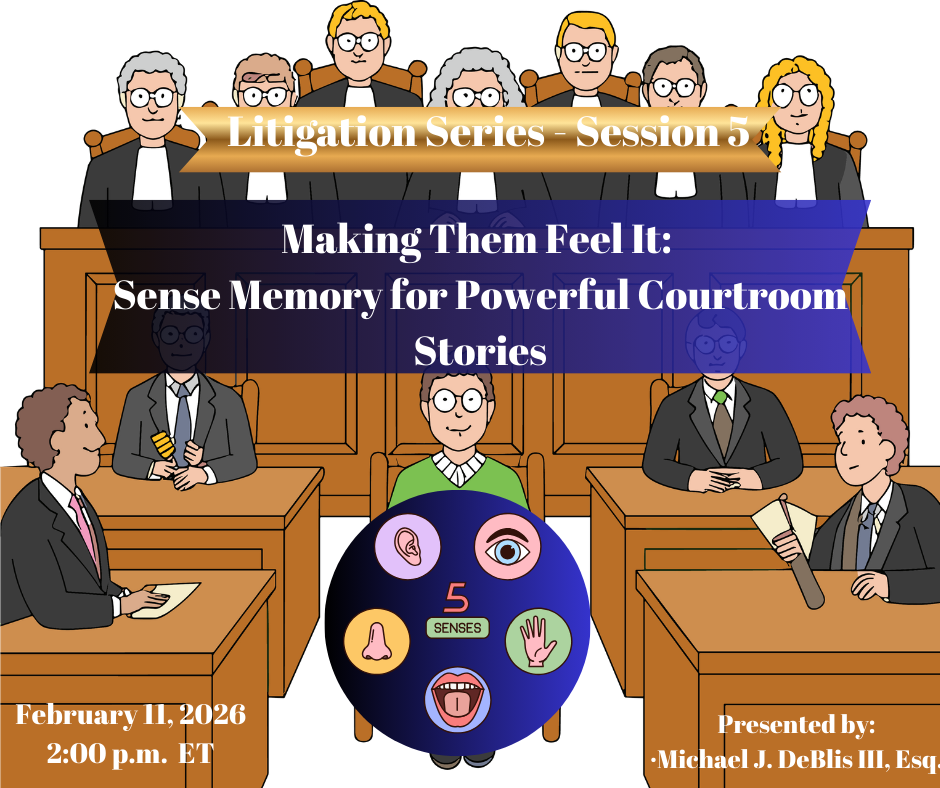
This presentation examines how “sense memory,” a core acting technique, can help lawyers bring greater detail, vividness, and emotional truth to courtroom storytelling. By reconnecting with sensory awareness—sight, sound, touch, taste, and smell—lawyers learn to evoke experiences that feel real rather than abstract.
The program encourages intentional, embodied storytelling, enhancing both the lawyer’s presence and the jury’s ability to visualize and emotionally engage with the narrative.
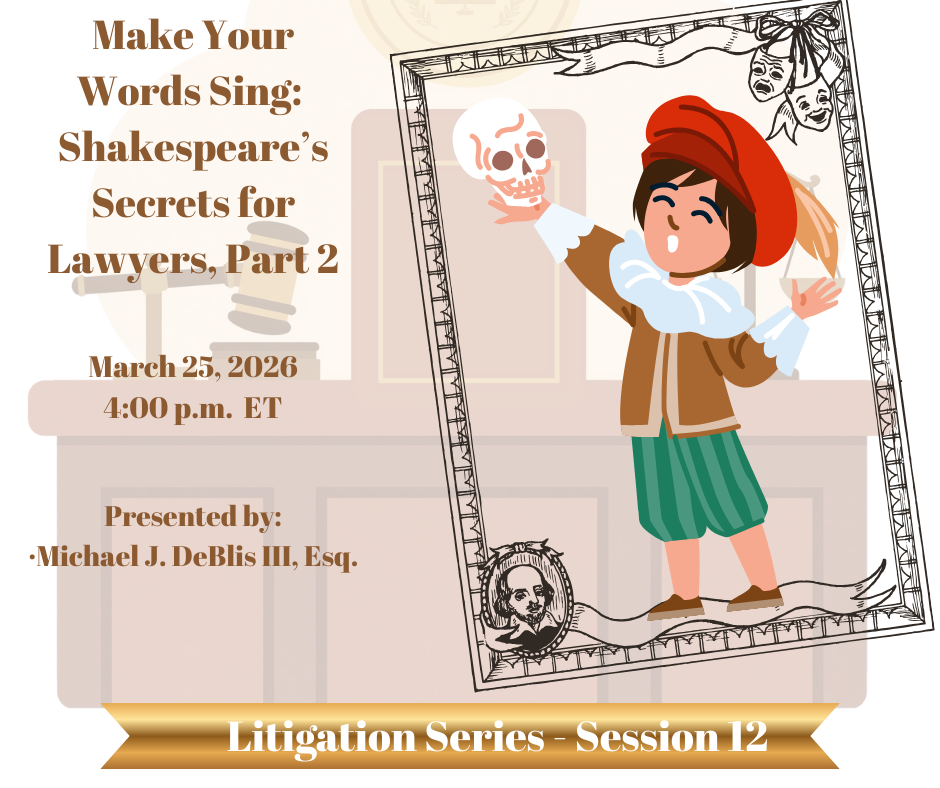
This companion program to Part 1 goes deeper into the rhetorical power of Shakespeare, emphasizing h...

The landscape of global finance is undergoing a seismic shift as traditional assets migrate to the b...

This course clarifies the distinction between profit and cash flow from a legal perspective. Attorne...
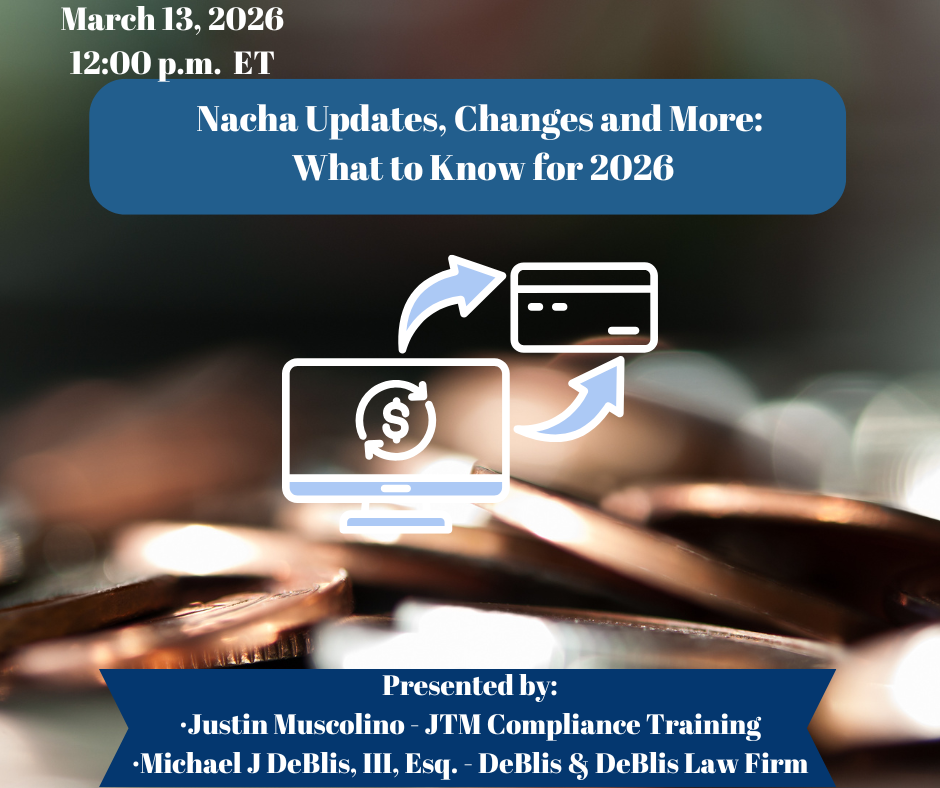
This attorney-focused program reviews upcoming Nacha rule changes for 2026 with emphasis on legal ob...
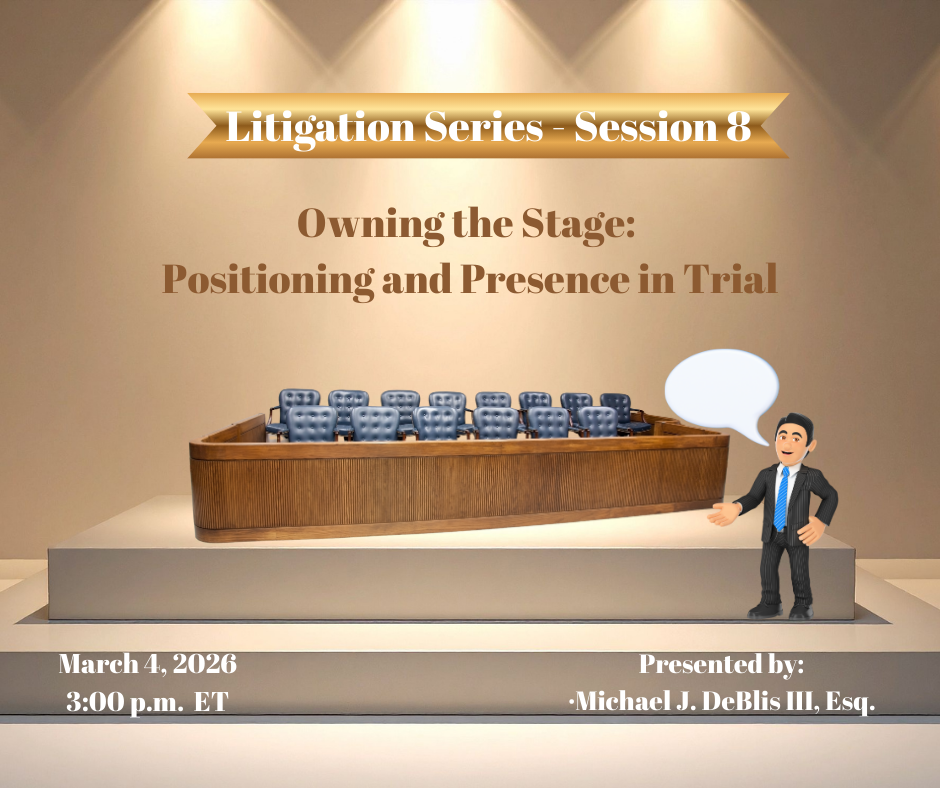
This presentation explores courtroom staging—how movement, spatial awareness, posture, and pre...
This program focuses on overcoming the inner critic—the perfectionist, self?doubting voice tha...
This course breaks down GAAP’s ten foundational principles and explores their compliance impli...
Part 1 - This program focuses specifically on cross?examining expert witnesses, whose credentials an...
Attorneys are judged every time they speak—in client meetings, depositions, hearings, negotiat...
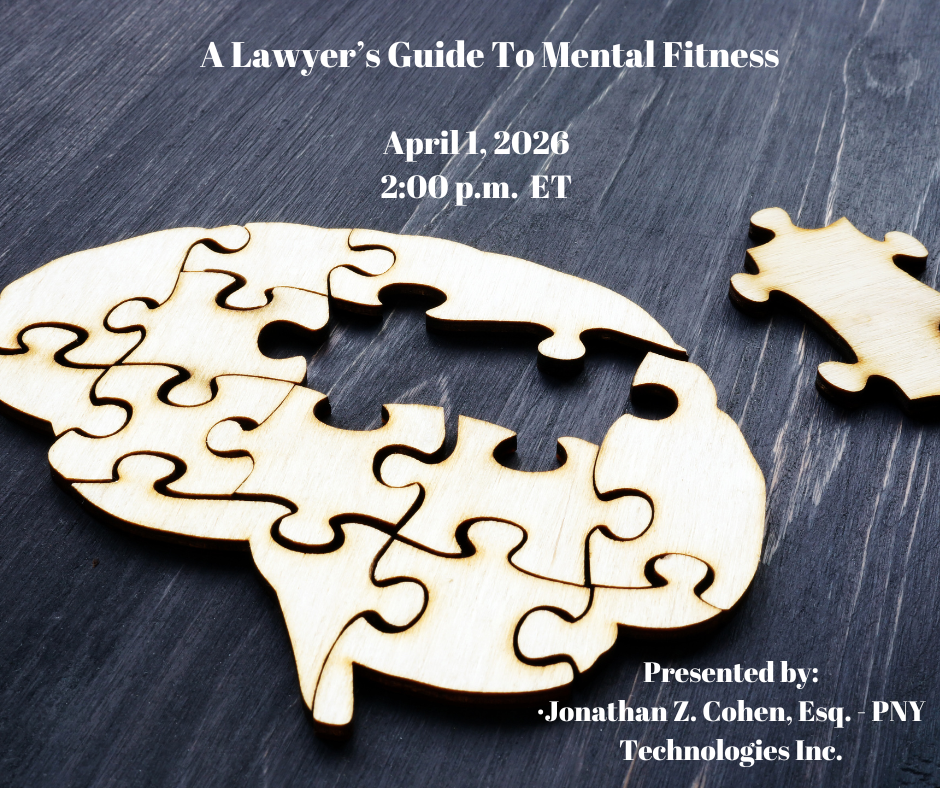
‘A Lawyer’s Guide To Mental Fitness’ is a seminar designed to equip professionals ...