
Exciting new series on “Voice, Body and Movement for Lawyers – How to connect with the jury and find Justice Through Dramatic Technique!”
Click here to find out more
We are among the least diverse industries in the United States. Unconscious bias not only impedes diversity efforts, it creates significant risks for law firms in terms of potential ethics violations and civil liability.
This program examines three ways unconscious bias can lead to bad lawyering: (1) how unconscious bias can foster violations of ethical duties of competence, communication and diligence, specifically Model Rules 1.1 (Competence), 1.3 (Diligence), 1.4 (Communication), and 8.4(d) (Conduct Prejudicial to the Administation oif Justice). The program also looks at how the lack of training and policies on unconscious bias can become a basis for violations of ethical duties of supervision under Rule 5.1, and (3) how unconscious bias can manifest itself in conduct that is most frequently the basis for bar complaints and malpractice suits. The course includes analysis and discussion of bias training that has been demonstrated through research to be effective at reducing the negative impact of unconscious bias on conduct and decision-making.
The course also looks policies, procedures, and insurance protection for law firms concerned about potential legal challenges to diversity efforts.
Objections are among the most powerful — and most misunderstood — tools in a trial lawye...
This program provides trial attorneys with a thorough grounding in the three principal currency repo...
Lawyers lose hundreds of billable and operational hours every year to poorly managed meetings. Unfoc...
This program will discuss how to design and implement legally sound diversity, equity, and inclusion...
AI tools are advancing faster than legal organizations can absorb them. This program examines why th...
The Twelfth Juror: Lessons on Jury Selection from a Trial Lawyer’s Novel and a Trial Consultan...
Class action litigation continues to expand in both number of filings and monetary exposure, with se...

Data privacy remains one of the most rapid areas of growth in the class action space. Plaintiffs con...
Class action waivers in arbitration agreements remain enforceable, but a decade of U.S. Supreme Cour...
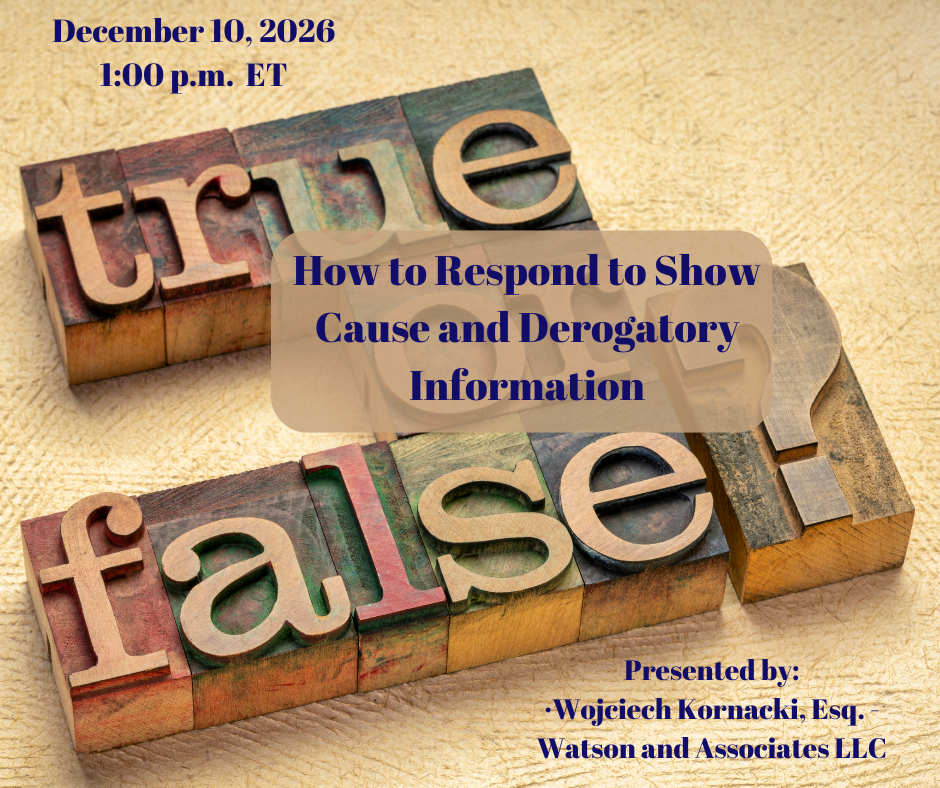
Adverse and derogatory information often has devastating effects on a contractor's ability to win co...