
Exciting new series on “Voice, Body and Movement for Lawyers – How to connect with the jury and find Justice Through Dramatic Technique!”
Click here to find out more
The IRS has been aggressively assessing penalties for late-filed foreign information returns against taxpayer, many of whom have voluntarily attempted to correct past non-compliance.
This program discusses the basic filing requirements for foreign information returns and the penalties that the IRS most commonly assesses, the reasonable cause defense to these penalties, and the procedures to challenging the assessments.

Class action waivers in arbitration agreements remain enforceable, but a decade of U.S. Supreme Cour...

Perfectionism is often rewarded in the legal profession. It drives attention to detail, thorough pre...

During this course you will take a deep dive into federal bid protest litigation at the U.S. Court o...

I was wrongfully separated from the military and I will get no military pay and disability retiremen...

This course is meant for lawyers of all levels and areas of practice, and in it, we will explore way...

Lawyers lose hundreds of billable and operational hours every year to poorly managed meetings. Unfoc...
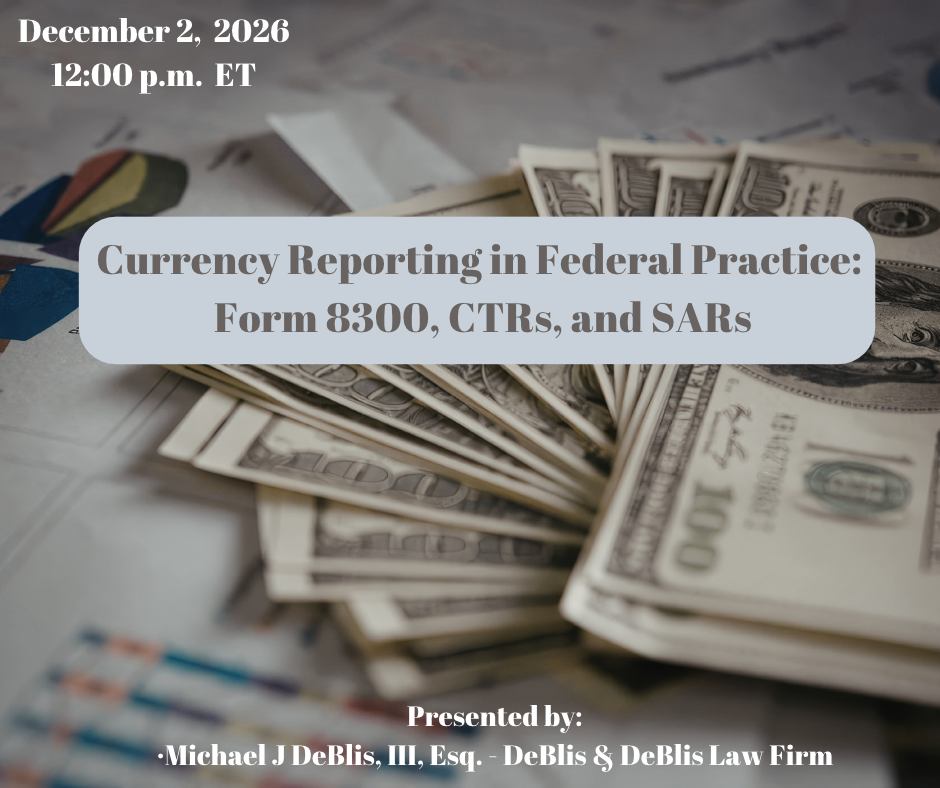
This program provides trial attorneys with a thorough grounding in the three principal currency repo...

During this course, you will learn about best practices and strategies for retaining intellectual pr...

Class action litigation continues to expand in both number of filings and monetary exposure, with se...

This course on trade secrets litigation provides real-world best practices through all key stages of...