
Exciting new series on “Voice, Body and Movement for Lawyers – How to connect with the jury and find Justice Through Dramatic Technique!”
Click here to find out more
The lawyer’s ethical obligation of confidentiality, the attorney-client privilege, and the attorney work product doctrine are three similar, but different concepts. Many lawyers and judges do not understand how they differ, and thus litigating these issues can be an extremely tricky and dangerous path.
This program will provide a detailed dive into each of these concepts and how to ensure that lawyers maximize the benefits of these concepts for their clients and themselves. We will be referencing the following ABA rules: 1.6, 1.13, 3.4(a),4.4(b)

Class action waivers in arbitration agreements remain enforceable, but a decade of U.S. Supreme Cour...

Perfectionism is often rewarded in the legal profession. It drives attention to detail, thorough pre...

Adverse and derogatory information often has devastating effects on a contractor's ability to win co...

Lawyers lose hundreds of billable and operational hours every year to poorly managed meetings. Unfoc...

2026 was a very important year when it comes to federal procurement developments, Artificial Intelli...

This course on trade secrets litigation provides real-world best practices through all key stages of...

I was wrongfully separated from the military and I will get no military pay and disability retiremen...
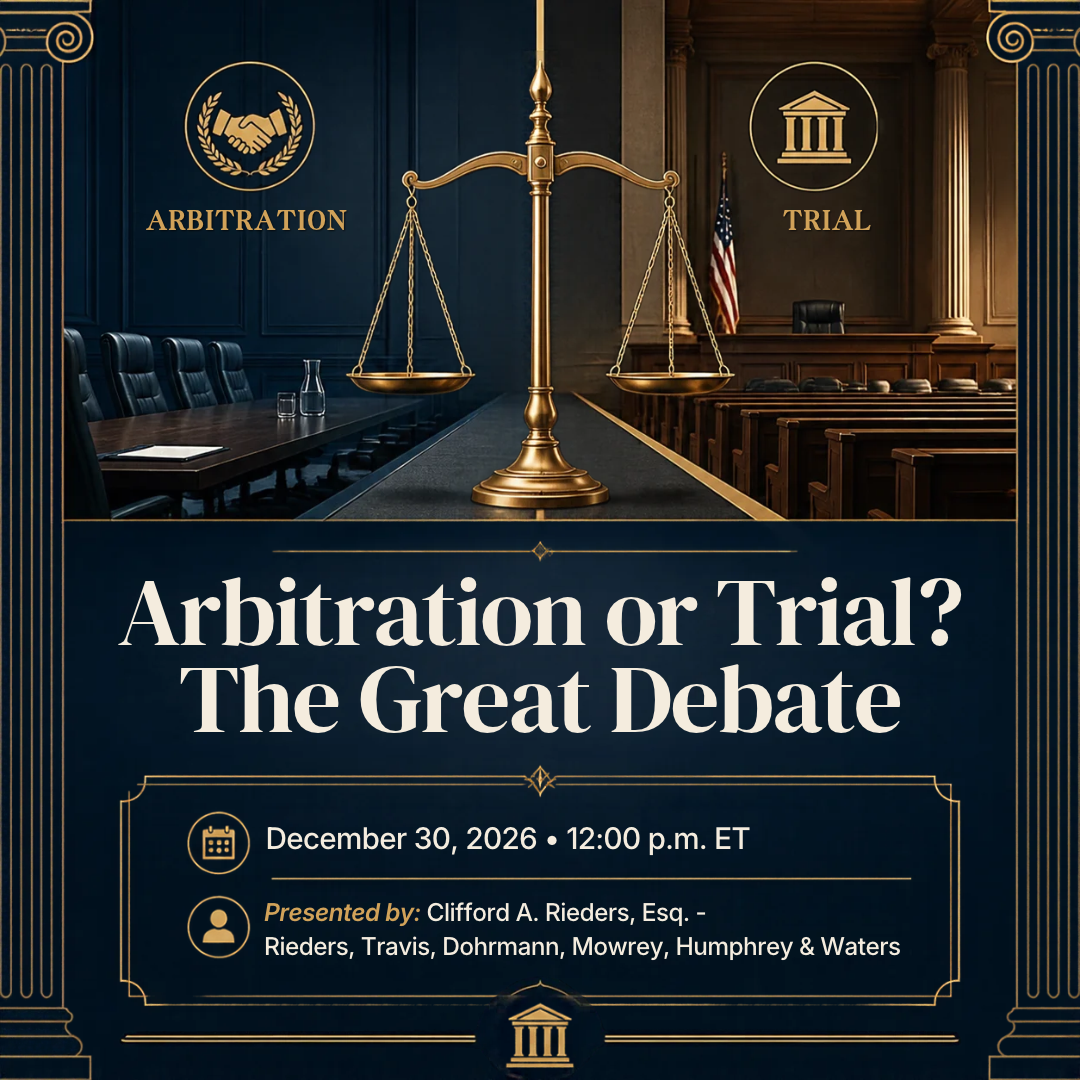
This seminar concerns a scope, jurisdiction, and exceptions to the Federal Arbitration Act. The Act ...

The practice of law places legal professionals under extraordinary and often chronic stress, making ...

During this course, you will learn about best practices and strategies for retaining intellectual pr...