
Exciting new series on “Voice, Body and Movement for Lawyers – How to connect with the jury and find Justice Through Dramatic Technique!”
Click here to find out more
Recent studies have shown that there has been a dramatic increase in impairment due to alcoholism, addiction and mental health disorders among members of the legal profession. The statistics are compelling and clearly indicate that 1 out of 3 attorneys will likely have a need for substance use or mental health services at some point in their careers. When added to the impact on the profession of the COVID-19 crisis and the resultant uncertainty, we have opened a Pandora’s box of unintended consequences.
Rule 8.3(c) of the Rules of Professional Conduct will be discussed as it relates to the duty to report attorney misconduct.
In addition to a breakdown of the results of the recent ABA and Law.Com studies, Mr. Quinn will discuss:
Food, sex, exercise – all may involve a variety of commonly enjoyed experiences that are healt...

Revocable versus irrevocable, dynasty versus by-pass and special needs versus Medicaid asset protect...

Our panelists will review your deposition strategy in personal injury cases from primarily the plain...
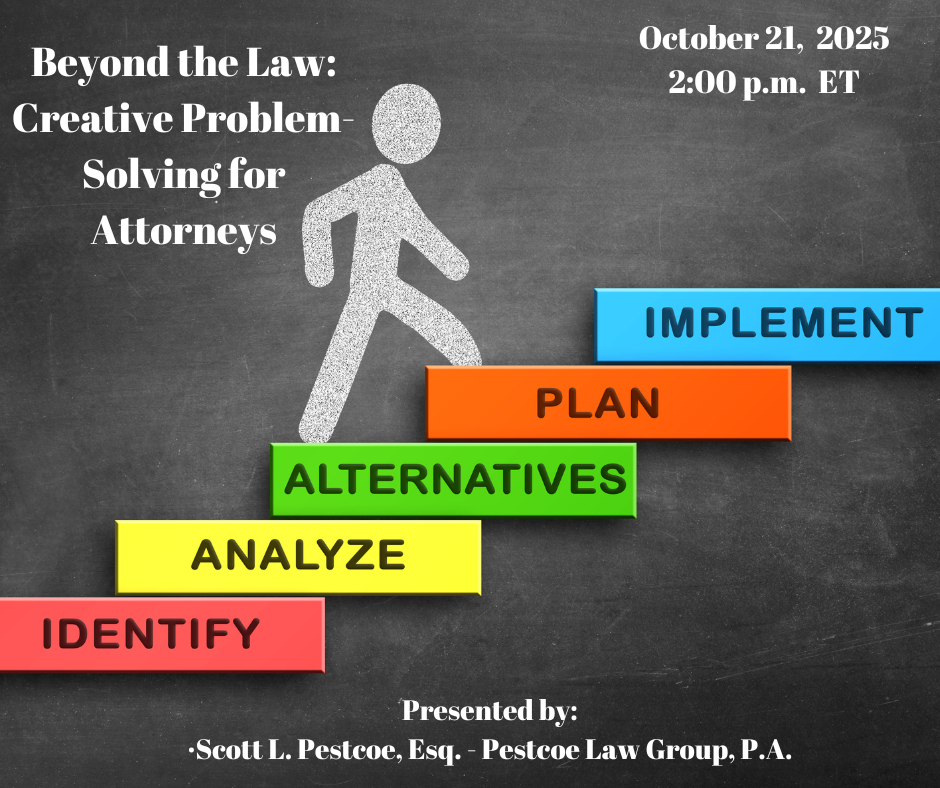
In the fast-paced, ever-evolving legal landscape, lawyers must go beyond traditional litigation and ...

Join Steve Herman on December 8, 2025, for "Maintaining Ethical Standards: Essential Strategies for ...

This program will explain the nuts and bolts of pursuing common claims against the federal governmen...
Learn effective marketing techniques from leading attorney marketing professionals, while earning 1 ...
Session 4 of 10 - Mr. Kornblum, a highly experienced trial and litigation lawyer for over 50 years, ...
Session 5 of 10 - Mr. Kornblum, a highly experienced trial and litigation lawyer for over 50 years, ...
This program will cover the sources from which practitioners can gather documents, witnesses, and ot...