
Exciting new series on “Voice, Body and Movement for Lawyers – How to connect with the jury and find Justice Through Dramatic Technique!”
Click here to find out more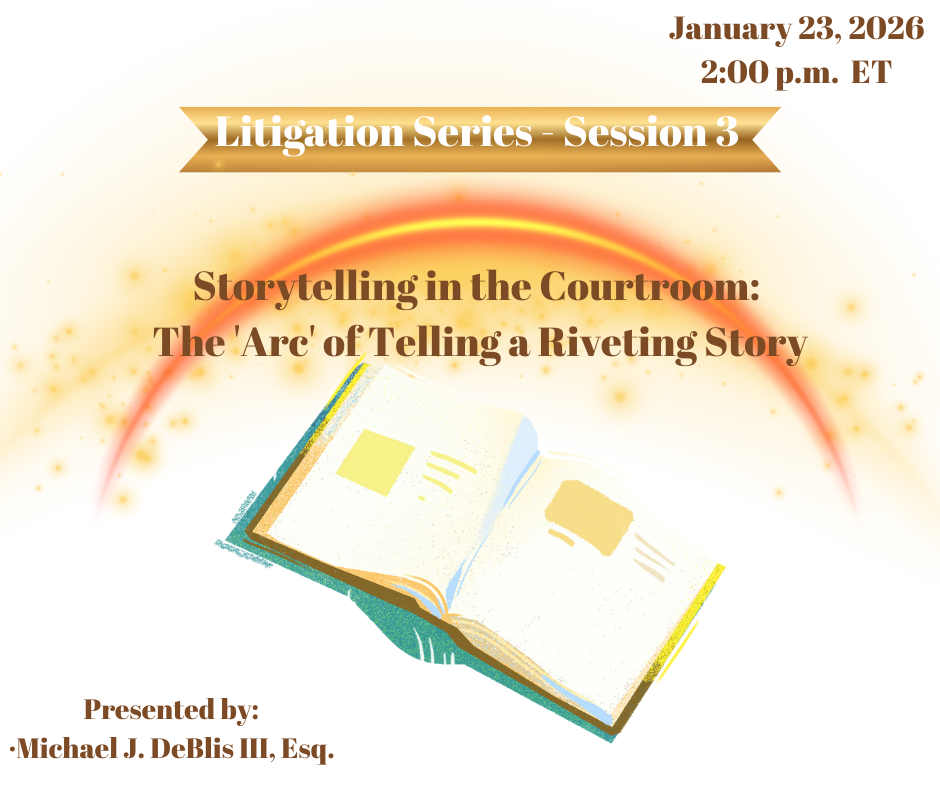
This program explains the architecture of storytelling in the courtroom, using narrative arc, rhythm, and character development to transform facts into compelling human drama. Drawing parallels to theater and literature, it illustrates how lawyers can use pacing, tension, and emotional logic to guide jurors through a persuasive journey.
The program reinforces that story—not data—is what moves people, and that an attorney who understands narrative mechanics can communicate more clearly, vividly, and memorably.

Effective data privacy and artificial intelligence governance programs do not happen by accident. Th...
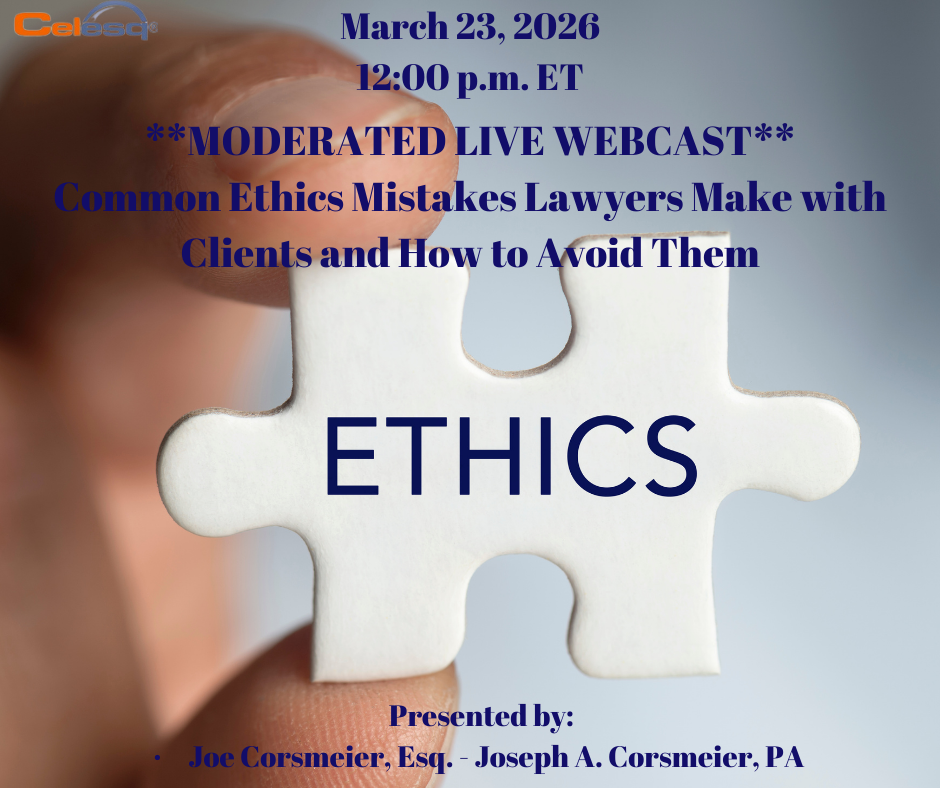
Many lawyers may not fully understand the Bar rules and ethical considerations regarding client repr...
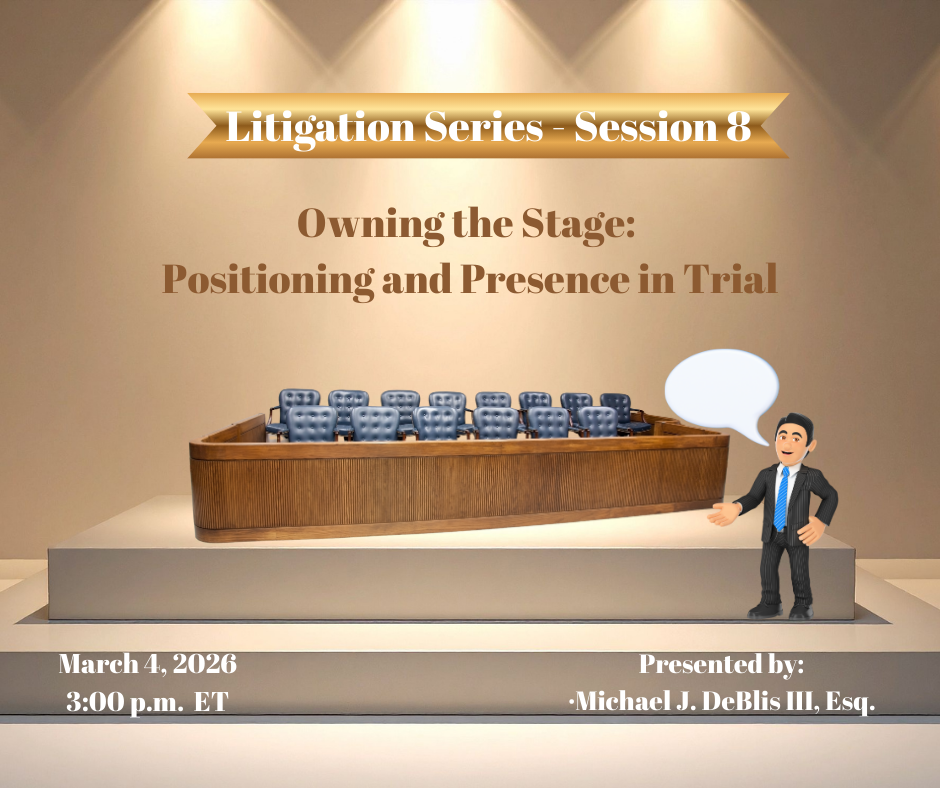
This presentation explores courtroom staging—how movement, spatial awareness, posture, and pre...
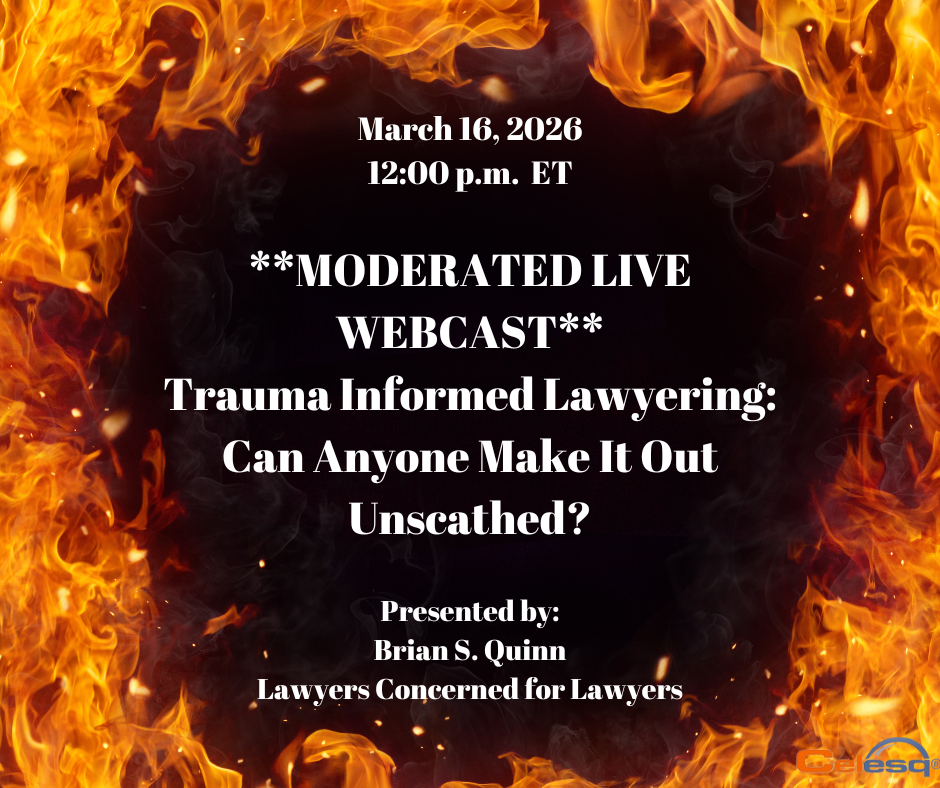
Attorneys hopefully recognize that, like many other professionals, their lives are filled to the bri...
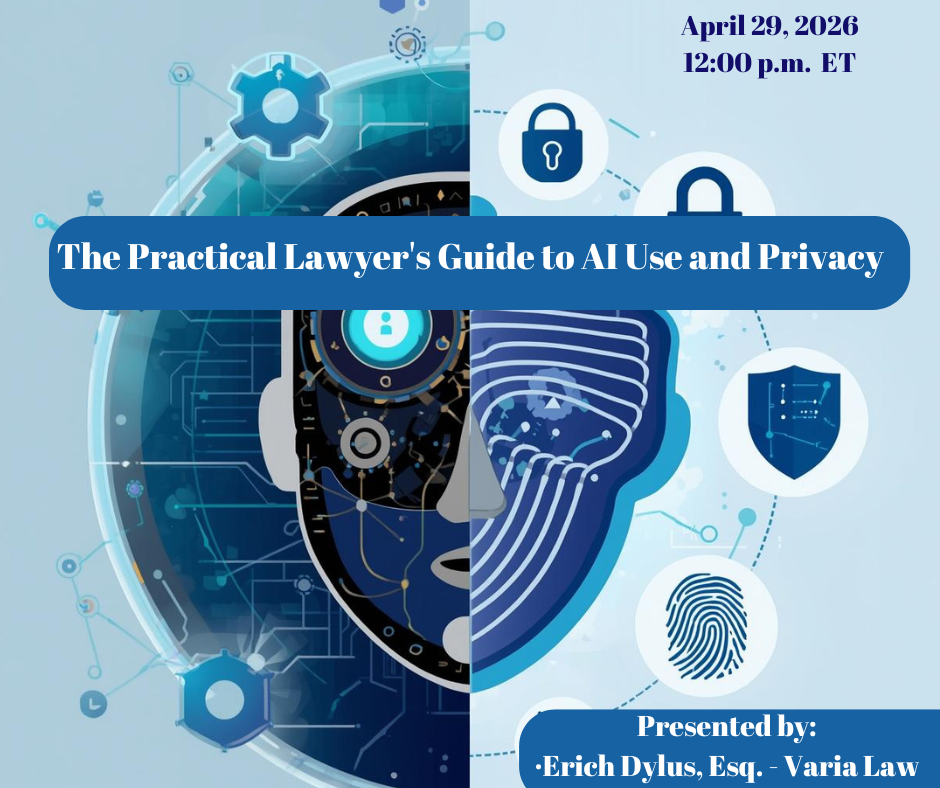
Review the basic software concepts and effective uses of generative AI, prompting strategies, and me...

Successful personal injury defense practice requires far more than strong legal arguments—it d...

This course clarifies the distinction between profit and cash flow from a legal perspective. Attorne...

Recent studies have shown that there has been a dramatic increase in impairment due to alcoholism, a...

United States patent law and the United States Patent and Trademark Office’s patent-related gu...
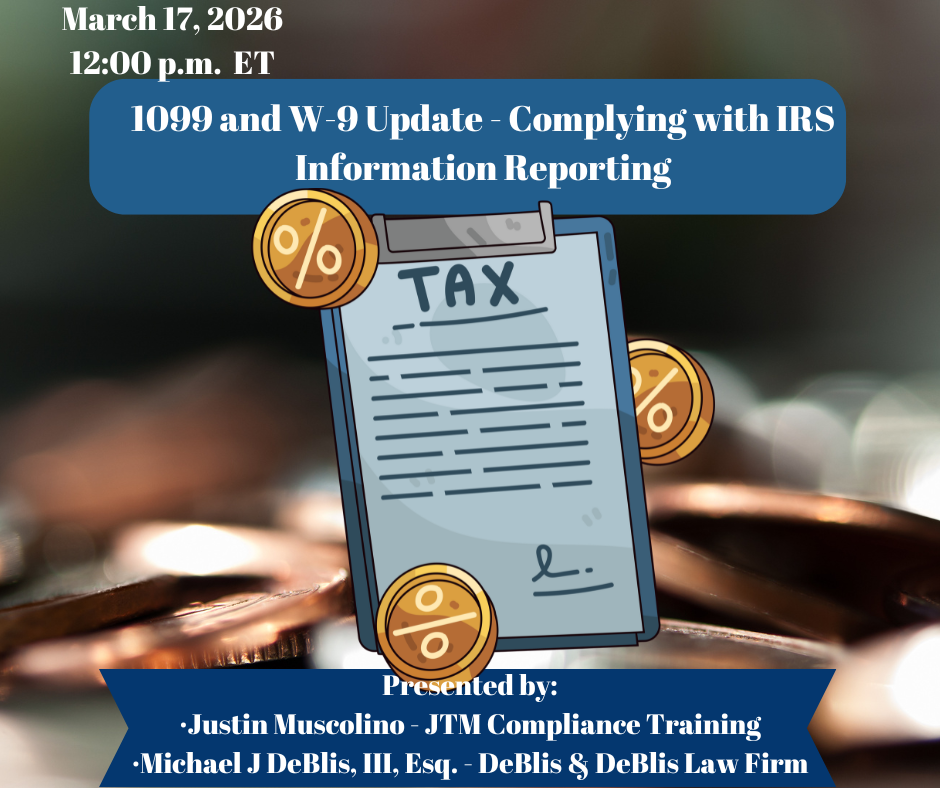
This CLE program covers the most recent changes affecting IRS information reporting, with emphasis o...