
Exciting new series on “Voice, Body and Movement for Lawyers – How to connect with the jury and find Justice Through Dramatic Technique!”
Click here to find out more
Courts and parties have been dealing with discovery overuse for decades. The advisory committee notes to both the 1983 and 2015 revisions to Rule 26 reference the problem of over-discovery and encourage judges to be more aggressive in identifying and discouraging discovery overuse. Have courts been more aggressive in discouraging discovery overuse? Have parties since the 2015 revisions to Rule 26 been inclined to follow Rule 1’s instruction to employ the Federal Rules to secure the just, speedy, and inexpensive determination of every action?
This webinar will review recent case opinions in which courts have independently revised overbroad discovery. The presenters will also provide their views on relevance and proportionality considerations in discovery and assessing the risk of court revisions to discovery requests.
Class action litigation continues to expand in both number of filings and monetary exposure, with se...
Lawyers lose hundreds of billable and operational hours every year to poorly managed meetings. Unfoc...
The practice of law places legal professionals under extraordinary and often chronic stress, making ...

Turn decades of client relationships into lasting equity. This practical CLE shows attorneys how to ...
2026 was a very important year when it comes to federal procurement developments, Artificial Intelli...

During this course, you will learn about best practices and strategies for retaining intellectual pr...

As the largest purchaser of goods and services in the world, the United States Government requires f...

I was wrongfully separated from the military and I will get no military pay and disability retiremen...
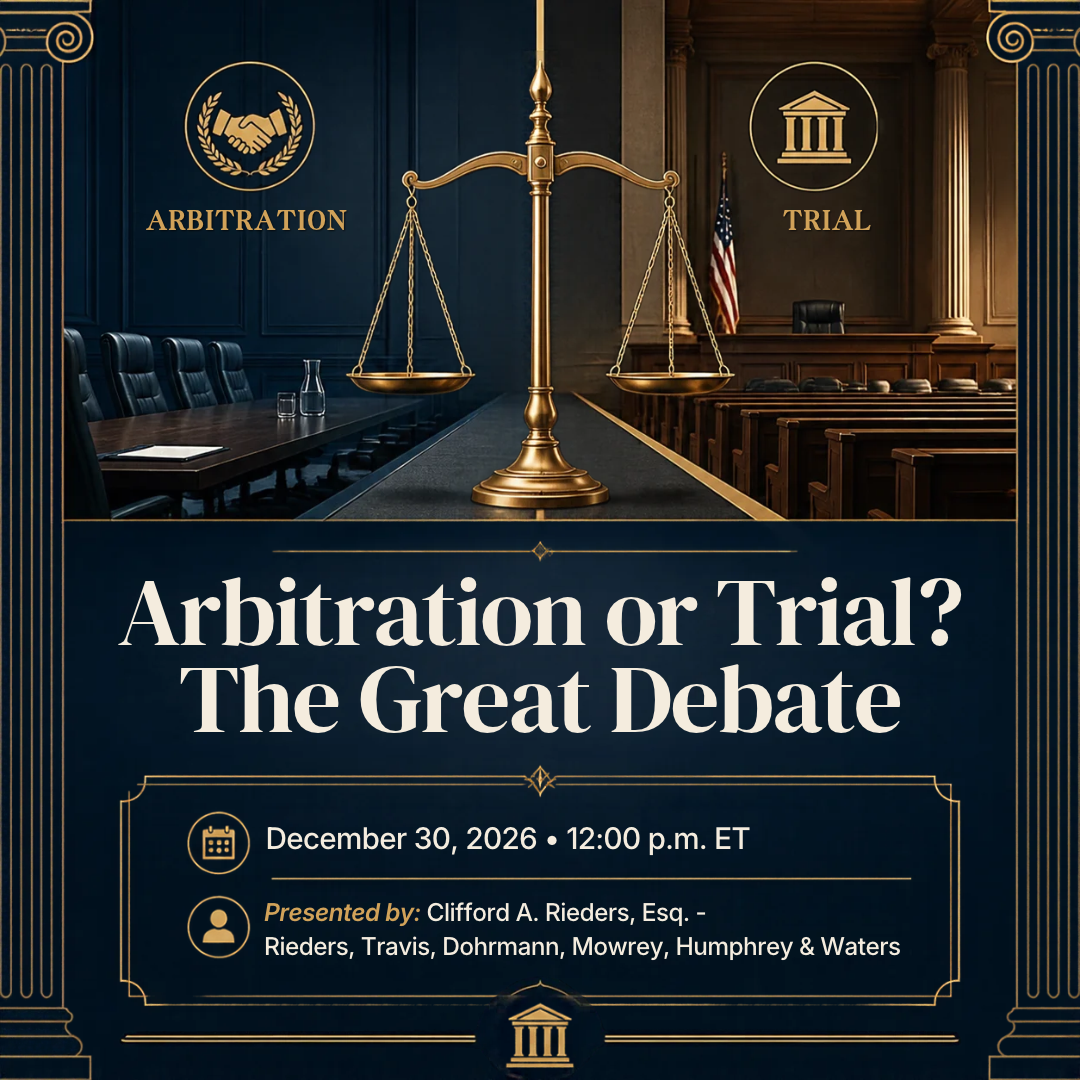
This seminar concerns a scope, jurisdiction, and exceptions to the Federal Arbitration Act. The Act ...

Class action litigation presents significant legal and business challenges for employers and corpora...