
Exciting new series on “Voice, Body and Movement for Lawyers – How to connect with the jury and find Justice Through Dramatic Technique!”
Click here to find out more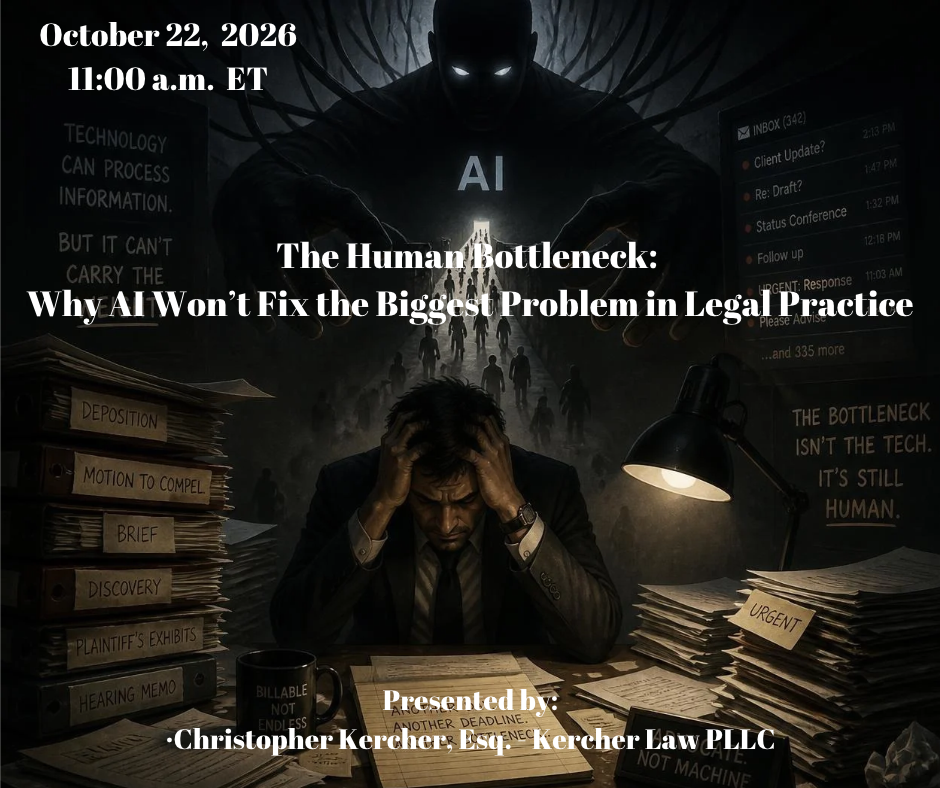
AI tools are advancing faster than legal organizations can absorb them. This program examines why the main constraints on effective legal AI are increasingly human and organizational, including workflow design, delegation, supervision, incentives, and judgment. Attorneys will learn how to identify legal tasks suited to AI assistance, preserve appropriate human oversight, diagnose the bottlenecks that keep AI from improving speed and quality, and redesign legal workflows so lawyers and AI systems complement one another.

This course on trade secrets litigation provides real-world best practices through all key stages of...
This program provides a practical roadmap to mastering every stage of the discovery process in civil...
Class action waivers in arbitration agreements remain enforceable, but a decade of U.S. Supreme Cour...

During this course, you will learn about best practices and strategies for retaining intellectual pr...

Perfectionism is often rewarded in the legal profession. It drives attention to detail, thorough pre...
This program will discuss how to design and implement legally sound diversity, equity, and inclusion...

As the largest purchaser of goods and services in the world, the United States Government requires f...

Turn decades of client relationships into lasting equity. This practical CLE shows attorneys how to ...

Adverse and derogatory information often has devastating effects on a contractor's ability to win co...
Confidentiality Agreements (also called NDAs) are too often treated as routine. So routine, th...