
Exciting new series on “Voice, Body and Movement for Lawyers – How to connect with the jury and find Justice Through Dramatic Technique!”
Click here to find out more
The two presenters, Dennis Suplee and Sam Silver, will deal with 60 questions in 60 minutes, including:
1.Why should you take a deposition?
2. Why should you not take a deposition?
3. “The usual stipulations” – What are they? Should you agree to them? What are the pitfalls if you do agree to them?
4. Where should you start your interrogation? With questions about the deponent’s education and employment history? Or with questions about the key event at issue in the litigation? How do you decide?
5. What should you do if opposing counsel gives an improper instruction not to answer? **
6. When can you confer privately with your deponent-client during the deposition? What is the current status of the case law as it has developed since Hall v. Clifton Precision?
7. How do you as the interrogator deal with comments from opposing counsel that suggest what the answer should be (including “If you know” and “If you remember”)? How do you as the interrogator deal with argumentative comments from opposing counsel?
8. Rule 30(e) says that the deponent can make “changes of form or substance” to his deposition answers? Can the deponent really change the substance of his deposition testimony after the fact?
9. In that situation (that is, where the deponent makes substantive changes to his testimony), what are the other side’s options?
10. Rule 30(b)(6) – Can the other side force you to produce “the most knowledgeable witness” on certain subjects? What should you, as counsel for the deponent, do if he is asked a question beyond the scope of the topics listed in the deposition notice?
11. Preparing the deponent to testify – Should you prepare him to “just answer the question, nothing more,” or to become a champion for your side of the case?
12. In what circumstances, should you take a video deposition? How can you make your use of a video deposition more effective at trial? Can you use video deposition snippets in your opening?
13. And much more.
Class action litigation presents significant legal and business challenges for employers and corpora...
The practice of law places legal professionals under extraordinary and often chronic stress, making ...

During this course, you will learn about best practices and strategies for retaining intellectual pr...

New York City’s new Non-Primary Residence Property Surcharge—commonly known as the pied-...
This program provides a practical roadmap to mastering every stage of the discovery process in civil...
Turn decades of client relationships into lasting equity. This practical CLE shows attorneys how to ...
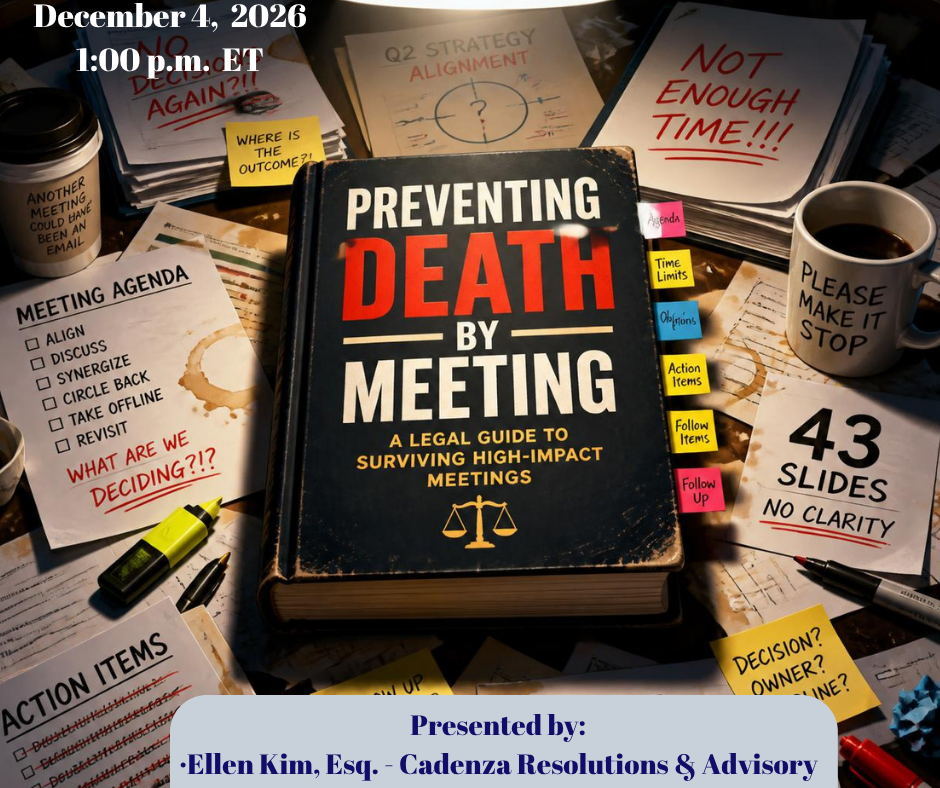
Lawyers lose hundreds of billable and operational hours every year to poorly managed meetings. Unfoc...
This course on trade secrets litigation provides real-world best practices through all key stages of...
Confidentiality Agreements (also called NDAs) are too often treated as routine. So routine, th...
Class action waivers in arbitration agreements remain enforceable, but a decade of U.S. Supreme Cour...