
Exciting new series on “Voice, Body and Movement for Lawyers – How to connect with the jury and find Justice Through Dramatic Technique!”
Click here to find out more
Daily media messages about Generative AI flood our psyches lauding this new technology’s swiftness in generating written content: Write everything faster than the speed of sound! No wait, do it faster than the speed of light! Expedite! Fast-track! Accelerate! As legal writers, we might feel like we’re suddenly expected to generate all our written work at warp speed. But obviously, velocity doesn’t necessarily equate to quality. And if you’re—like me—a traditionally slow adopter of new technology, this pressure can feel dizzying or disorienting. This CLE will focus on how we can untangle our understandable fear or resistance toward this new technology, give ourselves permission to shake hands with it and introduce ourselves (slowly), and decelerate while we ease into basic (and non-stressful) use cases, before figuring out where it might fit (and not fit) into our day-to-day lawyering workflow.
This presentation will offer—in an approachable tone and basic step-by-step approach for even the most reluctant adopters of new technology—a discussion of:
• what Generative AI is?
• basic Generative AI vocabulary
• an introduction to engaging with Generative AI in a Socratic-style dialogue
• four new skills lawyers can learn in order to engage with Generative AI ethically and responsibly—on one’s own timeline and terms
• potential ways to incorporate Generative AI into a legal writing workflow—without diluting our “writer identity”
• suggested “starter” use cases for getting comfortable experimenting with Generative AI in litigation and transactional lawyering
• interesting ways judges are using Generative AI
• potential pitfalls to watch out for
• how engaging with Generative AI might enhance our well-being as lawyers

Class action litigation continues to expand in both number of filings and monetary exposure, with se...

This course on trade secrets litigation provides real-world best practices through all key stages of...

During this course, you will learn about best practices and strategies for retaining intellectual pr...
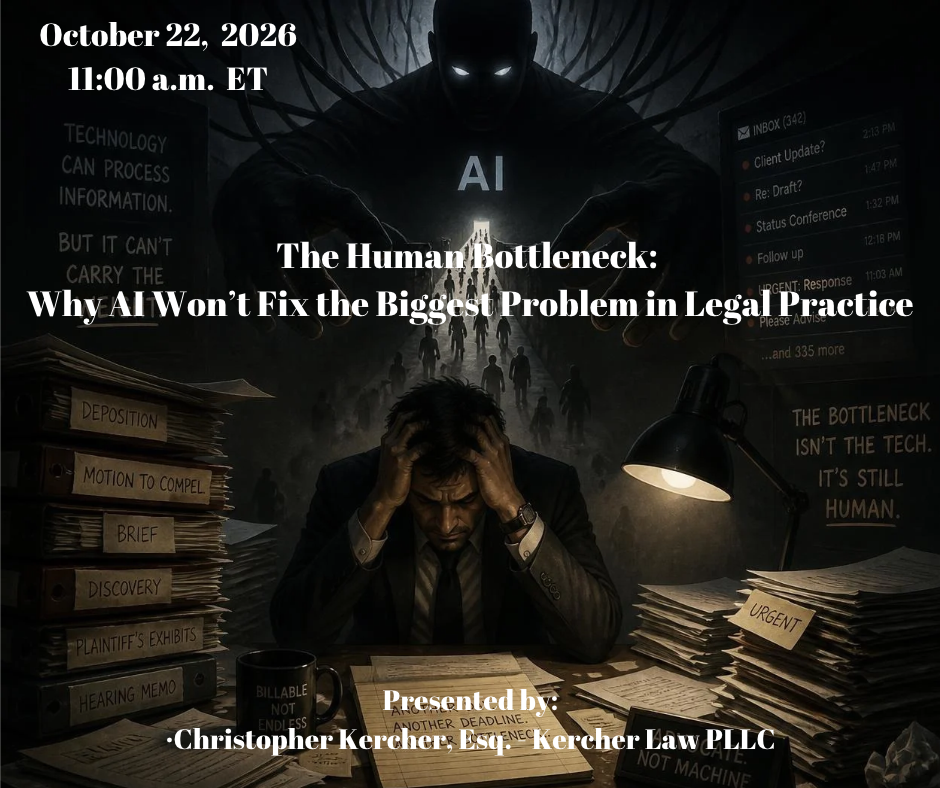
AI tools are advancing faster than legal organizations can absorb them. This program examines why th...
This program provides a practical roadmap to mastering every stage of the discovery process in civil...

This program provides trial attorneys with a thorough grounding in the three principal currency repo...
"Artificial Intelligence and the Practice of Law" (updated through 2026), is a 50-slide primer desig...

Class action litigation presents significant legal and business challenges for employers and corpora...

The practice of law places legal professionals under extraordinary and often chronic stress, making ...

As the largest purchaser of goods and services in the world, the United States Government requires f...